A little rhythm for this stage
2 month old wake windows: 1 to 2 hours
2 month old wake windows are 1 to 2 hours. Keep the morning gentle, and use fading attention after feeds or play as your signal to begin settling.
By Oleh Onysko, founder · Range: Cleveland Clinic · Updated
2 month old nap calculator
Wake window calculator · dates stay in your browser
Free · No account needed
2 month old example · 7:00 am wake-up
2 months · 1 hr to 2 hr awake
Wake
7:00 am
Nap 1
8:40 to 9:25 am
About 45 min
Nap 2
11:10 to 11:55 am
About 45 min
Nap 3
1:45 to 2:30 pm
About 45 min
Nap 4
4:25 to 5:10 pm
About 45 min
Bedtime
7:10 pm
Example nap lengths adjust within 30-120 min to fit the day. Wake ranges: Cleveland Clinic.
Get my nap planSample 2 month old schedule
A 2 month old nap schedule starting at 7:00 am. Read down the times to see how each sleep leads into the next awake stretch.
| Time | What | Awake before it |
|---|---|---|
| 7:00 am | Wake up | - |
| 8:40 am | Nap 1 (about 45 min) | 1 hr 40 min awake |
| 11:10 am | Nap 2 (about 45 min) | 1 hr 45 min awake |
| 1:45 pm | Nap 3 (about 45 min) | 1 hr 50 min awake |
| 4:25 pm | Nap 4 (about 45 min) | 1 hr 55 min awake |
| 7:10 pm | Bedtime | 2 hr awake |
Example times and nap lengths: Napbird calculator. Wake ranges: Cleveland Clinic.
How many naps does a 2 month old need?
In the calculator example, bedtime falls around 7:10 pm, after 2 hr awake. Change the nap settings above to see how your own day fits.
Napbird starts the day with 4 naps for this band. Think of the morning nap as an early pause after feeding, changing and a little company. The first awake stretch is shorter in the sample; later stretches leave more space between sleeps. Feeding remains part of each window, including the feeds that happen just before settling.
The bedtime window shows where the sample day finishes. Use it to plan the practical parts of your evening, such as when to prepare clothes and make the room quieter. If naps have ended earlier than the example, look at your baby's cues before carrying on toward the original bedtime. Starting the wind-down sooner can make the evening feel less rushed.
You may be finding recognizable pieces of a routine now: a comfortable place to feed, a favorite way to cuddle and a quiet sequence before sleep. Keep those pieces available to whoever is caring for your baby. At a handover, describe what happened after the last waking so the next person knows how much activity the current stretch has already held.
If feeding still occupies most of each waking spell, 1 month old wake windows and 6 week old wake windows are useful references.
What sleepy cues should I watch for at 2 months?
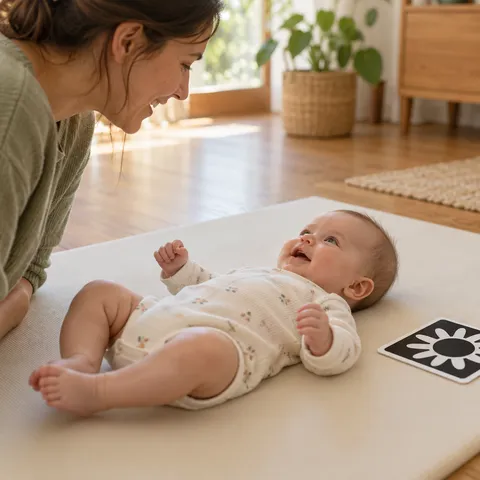
An alert baby may seem ready to keep looking around indefinitely, especially with new faces nearby. Watch for changes within that interest. Looking away, a glazed stare, yawning or a fussy response to play can tell you it is time to slow down. Pause the conversation or toy and give your baby a calmer place to focus.
Offer activity while your baby is comfortable and engaged, then let the pace soften before the nap. You can turn a lively chat into a quiet cuddle without creating a separate elaborate routine. If a feed is needed, include it. When feeding ends, pick up from how your baby feels then, rather than starting a new awake window.
An outing may use up the energy you usually see during play at home. When you come back, consider a quiet change and feed before introducing more stimulation. Keep the last wake time somewhere easy to check. Knowing that small fact can help you choose between another activity and beginning to settle when the afternoon has become hard to read.
When evening care feels unpredictable, the responsive rhythm in newborn wake windows still applies; 3 month old wake windows show what may change next.
What changes at 3 months?
Around the next stage, daytime sleep can begin to feel different. You might see a more recognizable morning nap alongside other naps that still vary. Carry forward the settling steps your baby knows, and keep the day flexible enough to respond when a sleep is brief. The 3 month guide explains how to think about these changes as you approach the next stage.
This is also a useful time to notice what makes a nap easier to offer. Is the room calmer after visitors leave? Does changing before a feed make the final transition smoother? Keep a simple note when something works well. Small observations like these are more practical at the next nap than trying to remember every detail of the entire day.
As your baby becomes more interested in the world, leave a little breathing room around outings and caregiver changes. Tell the next person when sleep ended and whether your baby has fed. That lets everyone begin from the same place. You can keep enjoying these more sociable awake spells while still protecting an unhurried path back to rest when attention starts to fade.
Keep 4 month old wake windows and 5 month old wake windows as later comparisons, rather than goals for stretching a two-month-old's afternoon.
2 month old at a glance
| Age | Wake window | Total sleep |
|---|---|---|
| 2 month old | 1 to 2 hours [1] | Varies |
How to plan naps with 2 month old wake windows
Start with the actual wake
Note when your 2 month old woke. Feeding, diaper changes and cuddles all count as awake time.
Watch for a quieter moment
Use 1 to 2 hours as a starting range. Begin settling sooner if attention fades or your baby seems tired.
Adjust after each nap
Count the next awake stretch from the end of the nap that actually happened. After a short nap, offer the next sleep toward the start of the range.
2 month old wake window questions
What is a good wake window for a 2 month old?
The Cleveland Clinic range is 1 to 2 hours. Use the shorter part as your first place to look for sleepy cues, then let your baby’s engagement and recent sleep help you judge the next step.
What if a nap ends much earlier than expected?
Take note of the actual wake and watch how your baby feels afterward. Keep the next stretch quieter if they seem tired. You can edit nap lengths in the calculator to see how the rest of the day moves.
Does a feed restart the wake window?
No. The window runs from waking until sleep begins. Feeding, changing, play and settling all fit within it, so a lengthy feed may leave only a little time for another activity.
Can we have a bedtime routine already?
Yes: choose a calm sequence that is easy to repeat, such as a change, feeding as needed and quiet words before sleep. Let the start time follow the day while the familiar steps stay the same.
Are 8 week and 10 week wake windows different?
Both sit near the two-month stage, with plenty of individual variation. Compare your baby's mood and settling across several days before changing the length of an awake stretch.
What if my 2 month old only takes short naps?
Start the next window from the actual waking time and watch for tiredness earlier. Short naps can make the example timetable shift. Keep responding to hunger instead of delaying feeds for a scheduled nap.
Link to this guide
Writing for parents or sharing with a caregiver? Link to the 2 month old guide so readers get the current ranges, the calculator and the sources.
Safe sleep, every time
Every nap and night starts with the same safe setup: on their back, on a firm, flat surface, in their own crib or bassinet. Keep it empty: no pillows, blankets, bumpers or toys. No weighted sleep sacks or inclined sleepers. Share a room, not a bed. Source: AAP safe-sleep guidance (2022).
For fever, pauses in breathing, blue or gray lips, difficulty waking, or unusual sleepiness with poor feeding, call your pediatrician, or emergency services if it feels urgent. Do not wait for a different nap window.
A guide, not medical advice. Napbird never gives medicine or supplement advice, melatonin included.
Nearby ages
Wake windows for other ages
Newborn wake windows
30 min to 1 hour
Follow cues · irregular napsWake windows & nap times3 week old wake windows
30 min to 1 hour
Follow cues · irregular napsWake windows & nap times1 month old wake windows
1 to 2 hours
4 naps a dayWake windows & nap times6 week old wake windows
1 to 2 hours
4 naps a dayWake windows & nap times3 month old wake windows
1 hr 15 min to 2 hr 30 min
4 naps a dayWake windows & nap times4 month old wake windows
1 hr 15 min to 2 hr 30 min
4 naps a dayWake windows & nap times5 month old wake windows
2 to 4 hours
3 naps a dayWake windows & nap times6 month old wake windows
2 to 4 hours
3 naps a dayWake windows & nap times7 month old wake windows
2 hr 30 min to 4 hr 30 min
3 naps a dayWake windows & nap times8 month old wake windows
2 hr 30 min to 4 hr 30 min
2 naps a dayWake windows & nap times9 month old wake windows
2 hr 30 min to 4 hr 30 min
2 naps a dayWake windows & nap times10 month old wake windows
3 to 6 hours
2 naps a dayWake windows & nap times11 month old wake windows
3 to 6 hours
2 naps a dayWake windows & nap times12 month old wake windows
3 to 6 hours
2 naps a dayWake windows & nap timesRanges: Cleveland Clinic. Nap counts follow the calculator’s starting plan.
Room for your 2 month old's cues.
Let today's naps shape the next window, one small adjustment at a time.
Get my nap plan