When to Stop Swaddling: Signs Matter More Than Age
Alex Novak October 17, 2026 9 min read
Today’s nap times, worked out from your baby’s age and wake-up time.
Get my nap plan
In this article
Stop swaddling as soon as your baby shows signs of trying to roll, even if a full roll has not happened. The American Academy of Pediatrics says this can begin as early as 2 months, so a birthday is not the deciding test.
The part that is easy to get backwards: you do not wait for a baby to sleep well without the swaddle before removing it. The movement milestone sets the deadline; you work on settling and the nap routine afterward.
| Swaddle transition at a glance | What to do |
|---|---|
| Any attempt to roll | Stop swaddling now, for naps and nights |
| Already rolling | No swaddle, including one that still compresses the chest or body |
| Not trying to roll, but you want to stop | You can choose ordinary sleep clothing now; swaddling is optional |
| Choosing a replacement | Ordinary pajamas or a properly fitted, nonweighted wearable blanket that allows free movement |
| Every sleep | Place baby on their back in a bare crib or bassinet |
These decisions follow the AAP guidance linked above. There is no need to buy a special transition product to start.
When should you stop swaddling: age or movement?
Movement comes first. Stop at the first signs of trying to roll, not after a particular number of weeks and not after your baby has proved they can roll in both directions.
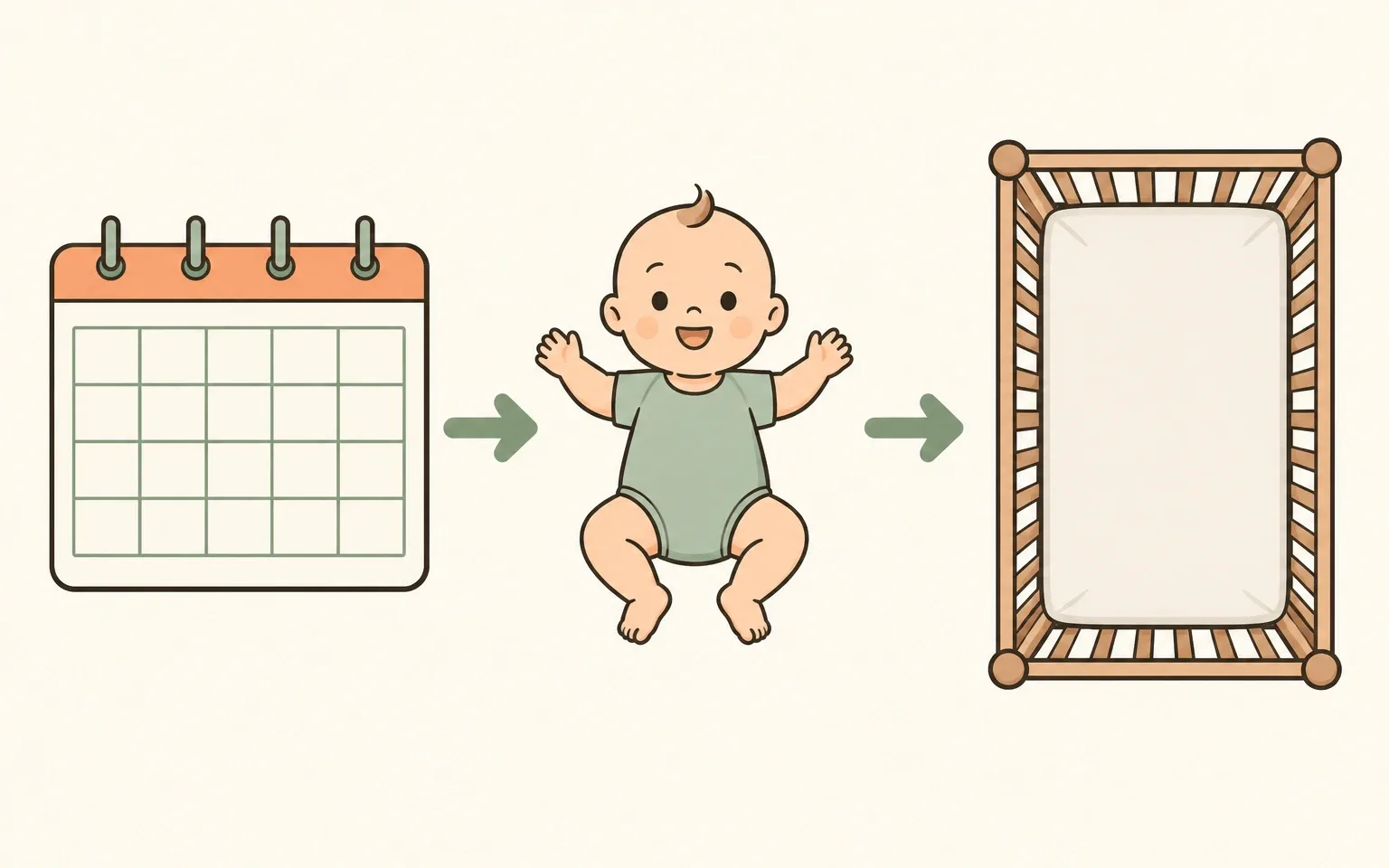
A calendar helps you prepare, but it cannot tell you whether today's swaddle is still appropriate. A baby who is trying to turn over during awake time has shown you something useful even if they have never done it in the crib. If you are unsure whether a movement is a rolling attempt, leave the swaddle off and ask your pediatrician about what you are seeing.
Keep the sleep question separate from the schedule question. Your baby's 2 month wake windows or 3 month wake windows can help you plan a gentle day. Neither guide is a reason to keep swaddling once attempts to roll appear.

Which transition fits your baby today?
Use what your baby is doing now, rather than another family's timeline. A rough night does not change the decision to stop once rolling attempts begin.
| Your situation | Verdict | What stays familiar |
|---|---|---|
| Trying to roll, whatever the age | Stop all swaddling for the next sleep | Usual feeding, quiet routine and sleep space |
| No rolling attempts, planning ahead | Moving straight to ordinary pajamas is an option | The same song, room and wind-down |
| Arms are out but the garment still compresses the body | This is not the same as an unrestricted sleep sack | Switch to clothing that allows free movement |
| Baby sleeps at home and with another caregiver | Share the same change with everyone | One clear handoff, not two different rules |
| More waking after the change | Keep the swaddle off and respond to needs | Feeding and comfort as needed |
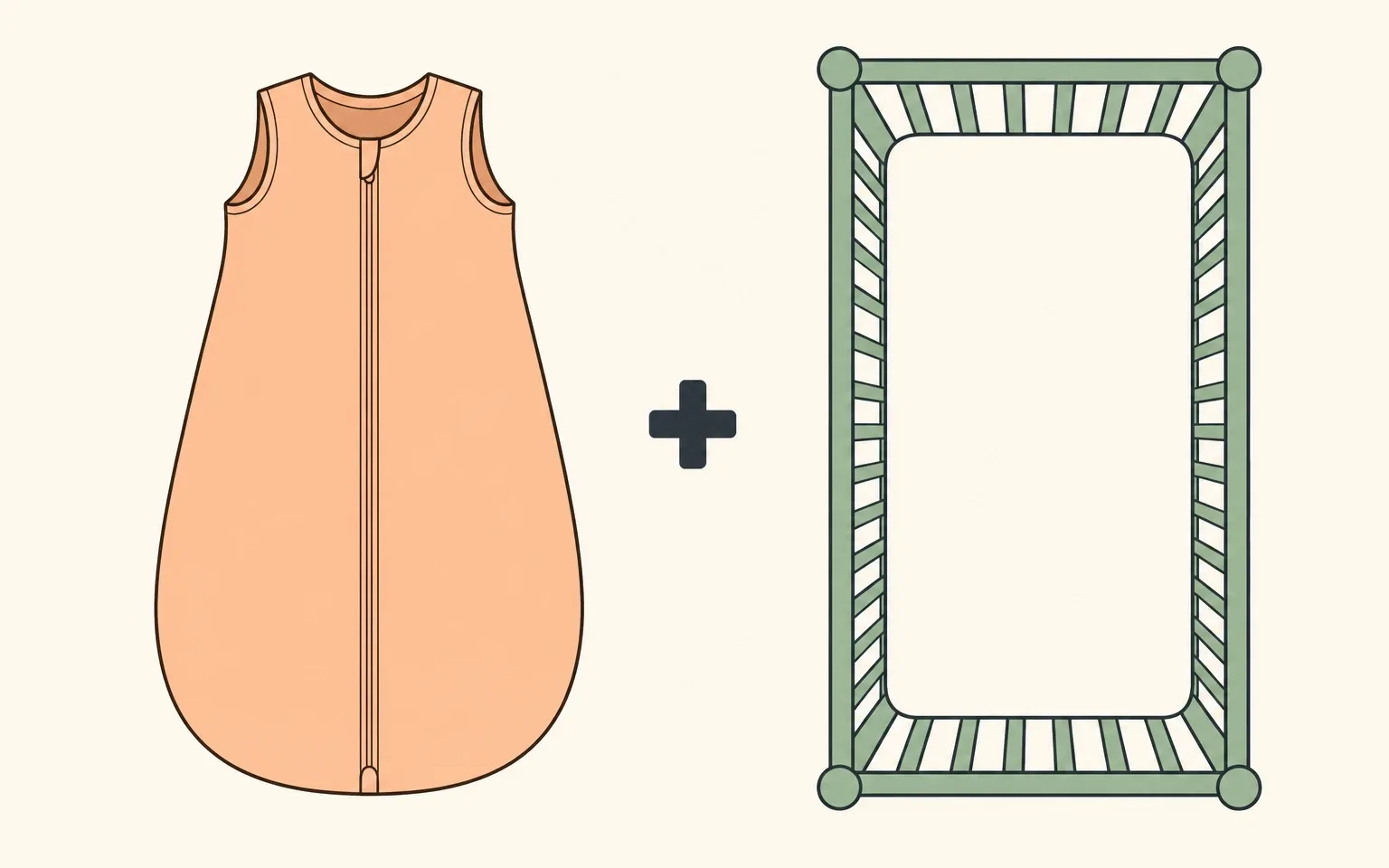
The AAP distinguishes a swaddle from a wearable blanket that lets the baby move freely. Arms out alone is not the whole test: check whether the garment still compresses the arms, chest or body. Do not use weighted sleep products.
What can your baby wear instead of a swaddle?
Ordinary sleep clothing is enough; a sleep sack is optional. If you use one, choose a nonweighted, correctly sized garment that allows free movement and follow its fit instructions.
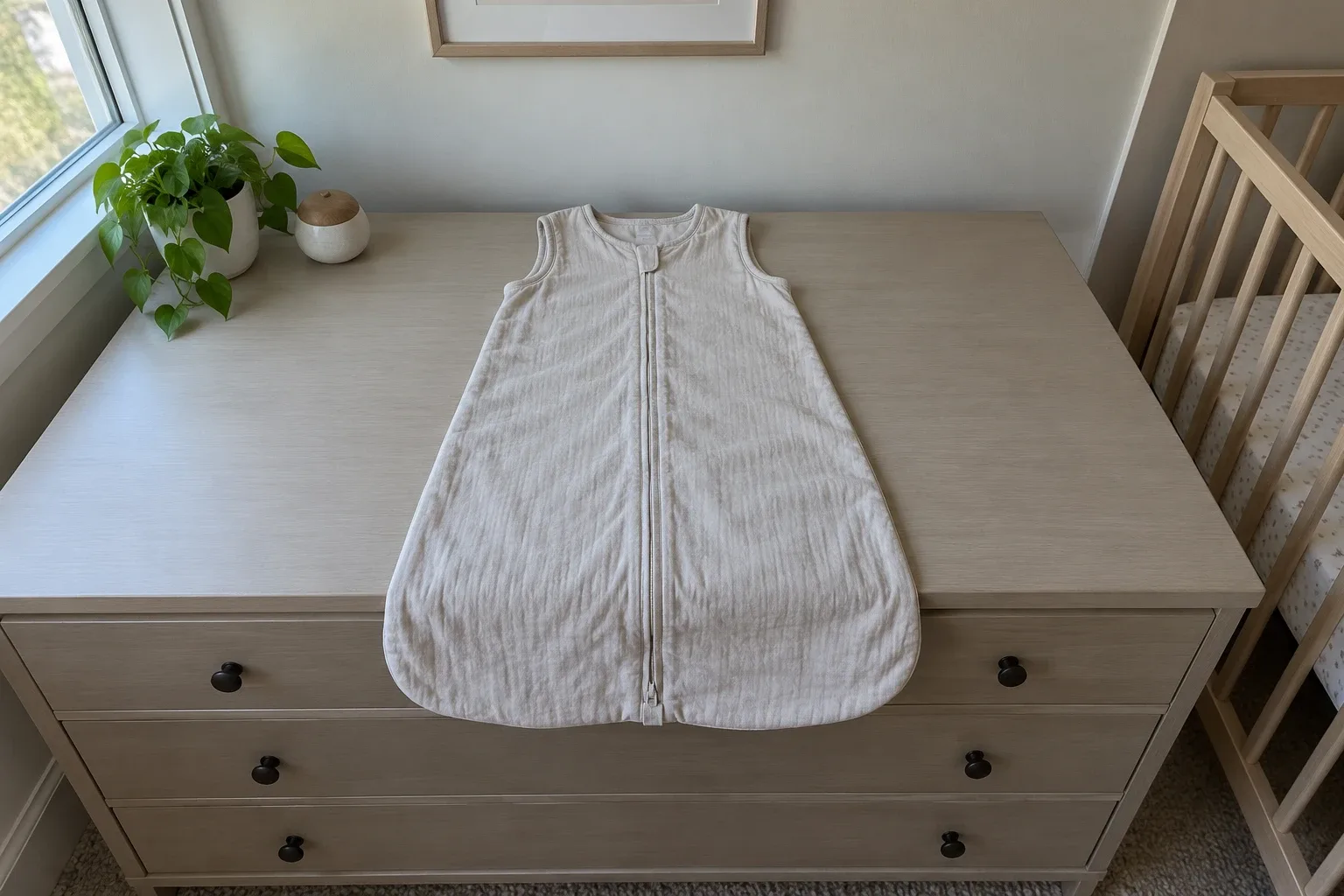
Check the neck and arm openings against the manufacturer's instructions. Do not improvise a fit with clips, knots or extra fabric, and do not put a loose swaddle blanket over the baby after removing it. An item called a transition sack may still restrict movement, so the name on the package is not the deciding feature.
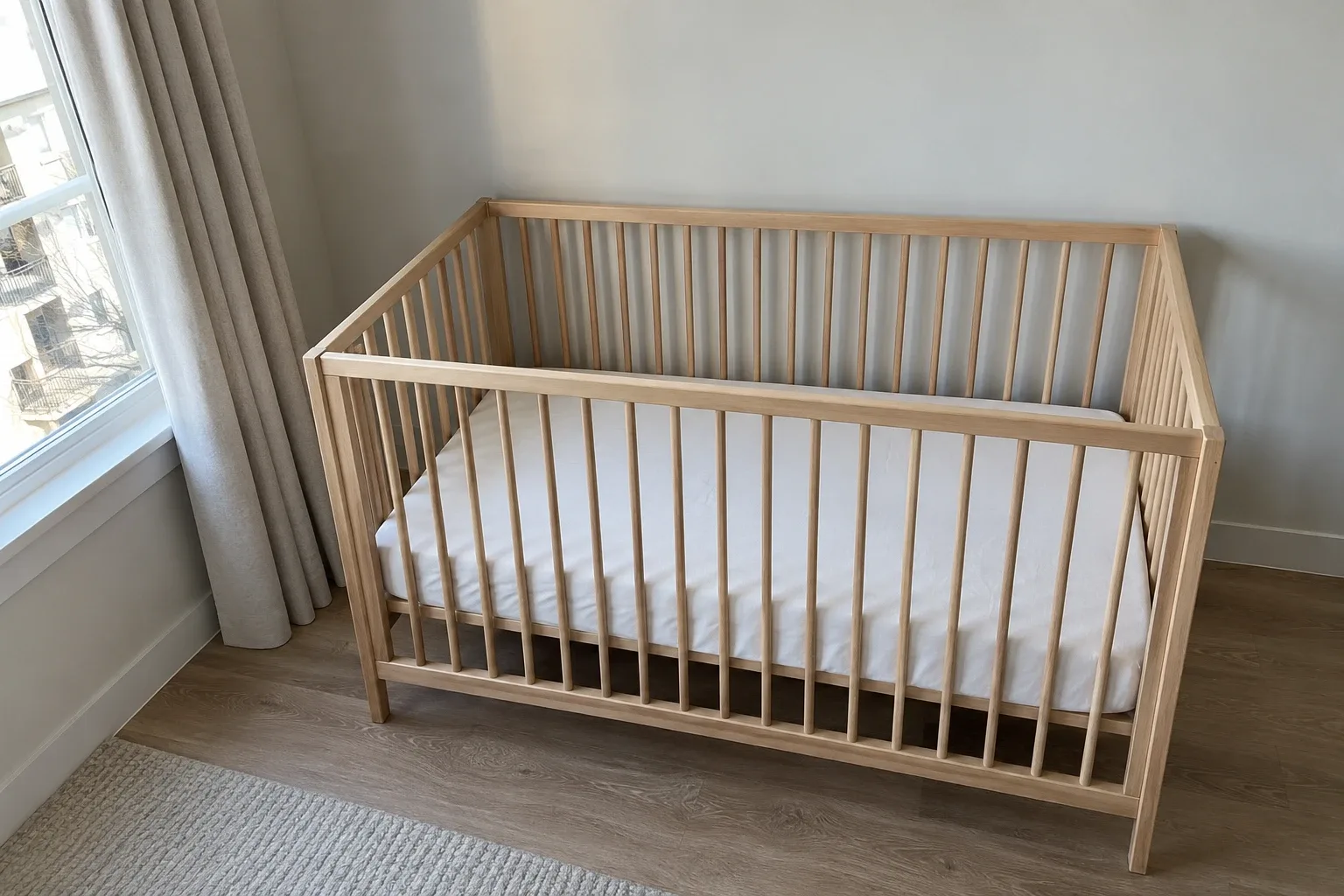
The AAP's sleep guidance calls for a firm, flat sleep surface, a fitted sheet and no loose bedding or soft objects. Keep the crib bare and place your baby on their back at the beginning of every sleep. Share a room, not a bed.
How do you make the change without changing everything else?
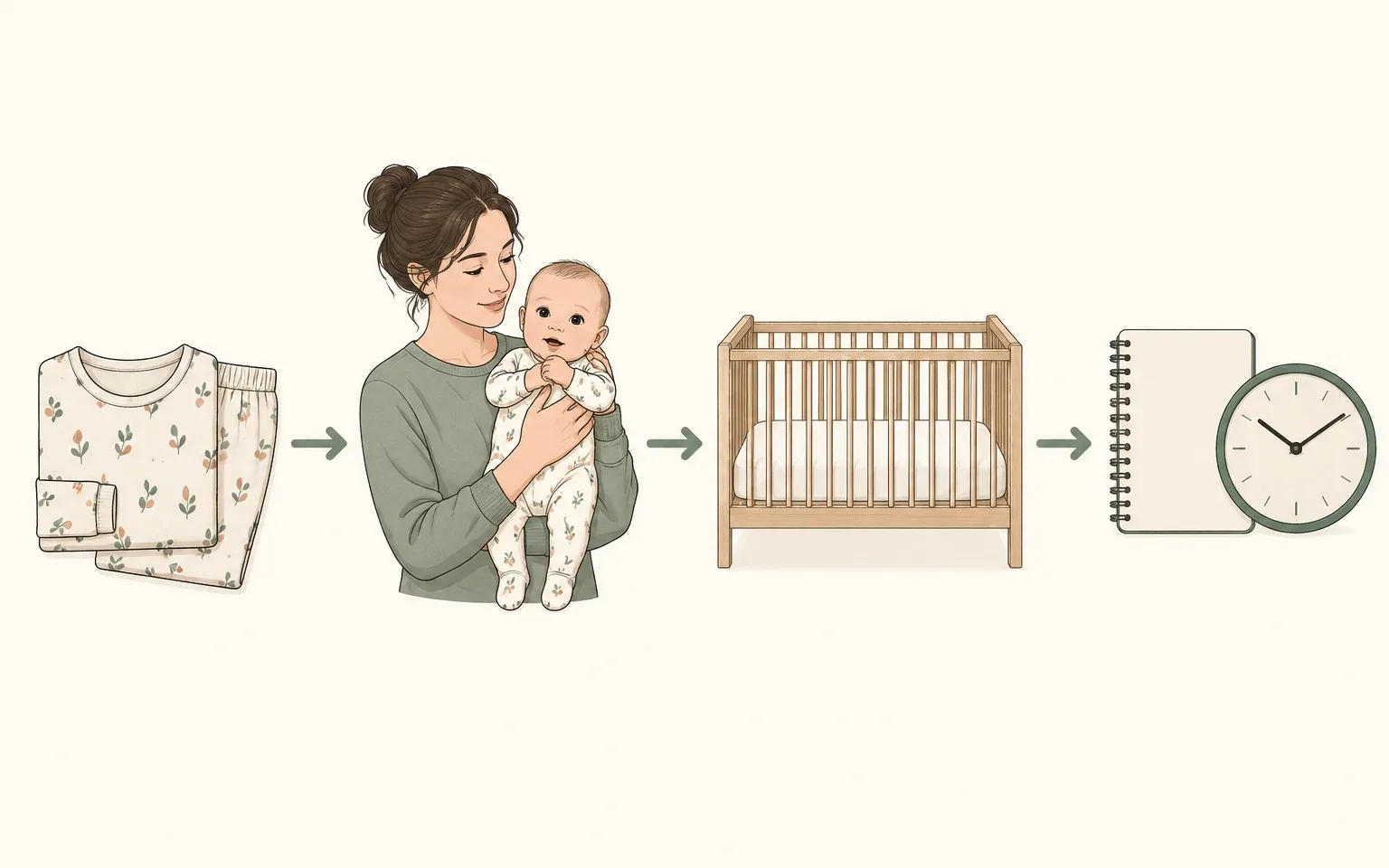
Remove the swaddle, then keep the rest of the routine as familiar as possible. You do not need to introduce sleep training, drop a feed or redesign the whole day at the same time.
How to settle without the swaddle
- Choose unrestricted sleep clothing
If rolling attempts have begun, stop swaddling for every sleep now. Put the swaddle away so another caregiver does not reach for it automatically.
- Keep your usual wind-down
Feed when your baby is hungry, change the diaper and use a familiar quiet song or cuddle while you are awake. The order can be simple; it does not need to be a long ritual.
- Use the same bare sleep space
Place your baby on their back in the crib or bassinet. Do not add a blanket, pillow, positioner or weighted item to replace the feeling of a swaddle.
- Respond, then note what actually happened
Offer feeding and comfort as needed. Write down the real wake time, nap start and nap end rather than judging the night by a promised transition deadline.
There is no guaranteed number of nights that makes this successful. A useful first goal is consistency in the clothing and sleep space, not a promise of longer sleep.
What if naps get shorter after stopping?
A short nap does not mean the swaddle needs to come back. Look at the next awake period, hunger and comfort before deciding to change the whole schedule.
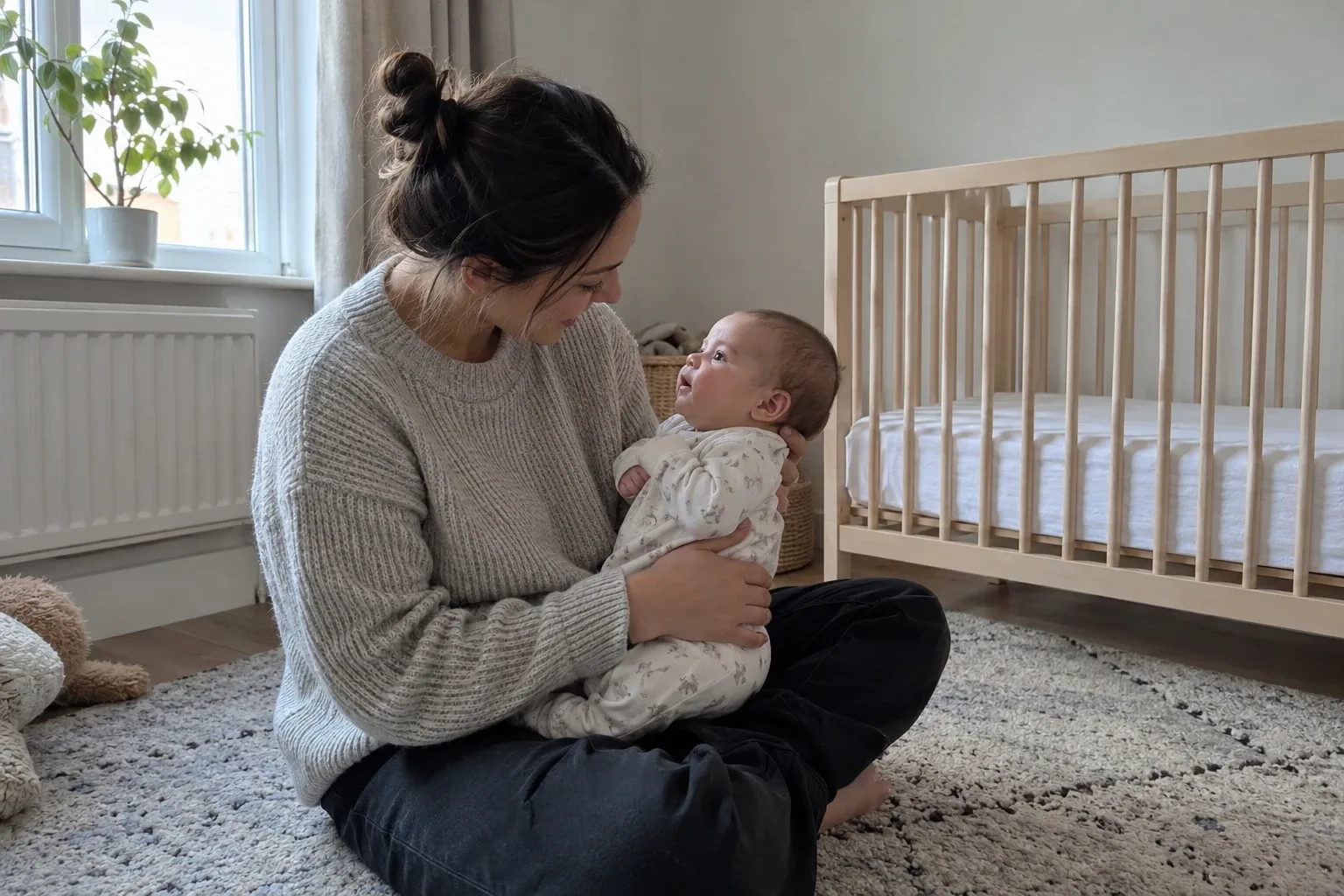
Use a clock or a simple note: write the wake time, notice how your baby is doing, then start the familiar wind-down when they look ready. Count feeding and diaper changes as part of that awake time. Do not deliberately keep a tired baby awake longer to compensate for an unsettled nap.
For context rather than a deadline, Cleveland Clinic's wake-window guide gives 1 to 2 hours for 1 to 3 months and 1 hour 15 minutes to 2 hours 30 minutes for 3 to 4 months. These are starting ranges, not instructions to ignore your baby. The 4 month wake-window guide shows how to think through that stage separately from the swaddle decision.
A paper note works well for a single nap. The awkward part is keeping up when actual wakes shift the rest of the day. Napbird's age-based nap plan gives you a place to start from your baby's age and wake time; it does not decide whether swaddling should continue.
Common mistakes when stopping swaddling
- Waiting for a complete roll. Stop when attempts begin, rather than waiting for the milestone to be finished.
- Keeping the swaddle just for naps. Apply the change to every sleep and tell every caregiver.
- Assuming arms out always means unrestricted. Check the chest and body too; a compressive swaddle is not an ordinary sleep sack.
- Replacing the swaddle with loose or weighted bedding. Keep the crib bare and use ordinary sleep clothing or a suitable nonweighted sleep sack.
- Changing feeds and the whole schedule at once. Keep responding to hunger and comfort needs while you learn the new routine.
When should you call your pediatrician?
Call your pediatrician if you are unsure about your baby's movements, if feeding is poor or if there is unusual sleepiness. Seek urgent help for trouble breathing, blue or gray lips, or difficulty waking your baby.
A guide, not medical advice. Your pediatrician can answer questions about your baby's development and any individual care instructions.
When to stop swaddling is a movement decision, not a sleep-performance test. At the first attempts to roll, leave the swaddle off for naps and nights, keep the crib bare and work with the routine your baby already knows.
Frequently asked questions
Stop as soon as you see signs of trying to roll. Do not wait for a complete roll or a specific birthday.
Choose a properly fitted, nonweighted sleep sack that leaves movement unrestricted, or use ordinary sleep clothing instead. If rolling attempts have begun, stop swaddling now rather than using an arms-in transition stage.
Babies differ, and swaddling is not required for sleep. Whether a baby seems more settled in a swaddle does not override the need to stop when rolling attempts appear.
An unswaddled baby can move their arms freely, and ordinary pajamas keep the routine simple. You do not need to keep using a swaddle just because you started with one.
Yes, a baby can become too hot in a sleep sack or other clothing. Follow the garment's instructions, avoid too many layers and ask your pediatrician if you are unsure about dressing your baby for the room.
Some babies seem unsettled when swaddled, and you do not have to continue using one. Try ordinary sleep clothing while keeping the same back-sleeping position and bare crib or bassinet.
Wake windows for this age: Newborn wake windows and nap times
Share article
About the author
Founder and editor
Alex Novak founded Napbird, builds the wake window calculator and edits every guide against the pediatric sources cited on each page. Alex is not a doctor or a sleep consultant, so Napbird is a guide, not medical advice.
More baby sleep guides

Wake windows & schedules · 11 min
1 Month Old Wake Windows: 1 to 2 Hours + Sample Day
1 month old wake windows are 1 to 2 hours, and the first window of the morning is usually the shortest one. See a sample 4 nap day from 7:00 am, the early sleepy cues and what to do when the day goes off plan.

Wake windows & schedules · 11 min
3 Week Old Wake Windows: 30 to 60 Min + Next Sleep
3 week old wake windows are 30 min to 1 hour, and a doze during a feed does not reset the clock. See the feed, wake, sleep loop, the early sleepy cues and a wind-down anyone in the house can repeat.

Wake windows & schedules · 10 min
6 Week Old Wake Windows: 1 to 2 Hours + 4 Nap Schedule
6 week old wake windows are 1 to 2 hours, and after a short nap the next window should be shorter, not longer. Get a sample 4 nap day from 7:00 am, the early sleepy cues and a plan for days that go off script.

Wake windows & schedules · 11 min
Newborn Wake Windows: 30 to 60 Min + Feed, Wake, Sleep
Newborn wake windows are 30 min to 1 hour, and the feed is part of that time, not a step before it. Here is the feed, wake, sleep loop, the early sleepy cues to watch for and how to count the next window from the real wake.

Night sleep · 9 min
Dream Feed: What It Is and Whether Your Routine Needs It
A dream feed is optional, not a promise of longer sleep. Learn what it means, how to review your evening and why feeding cues come before the clock.
Wake windows & schedules · 10 min
10 Month Old Wake Windows: 3 to 6 Hours + Sample Day
10 month old wake windows widen to 3 to 6 hours, yet the sample two-nap day stays close to 3 hours per stretch. Here is how to use the wider range without overtiring a cruising baby, plus cues, a wind-down and safe sleep basics.