4 Month Old Wake Windows: 1h 15m to 2h 30m + Schedule
Oleh Onysko October 16, 2026 11 min read
Nap times for your 4 month old, worked out from their wake-up time.
Get my nap plan
In this article
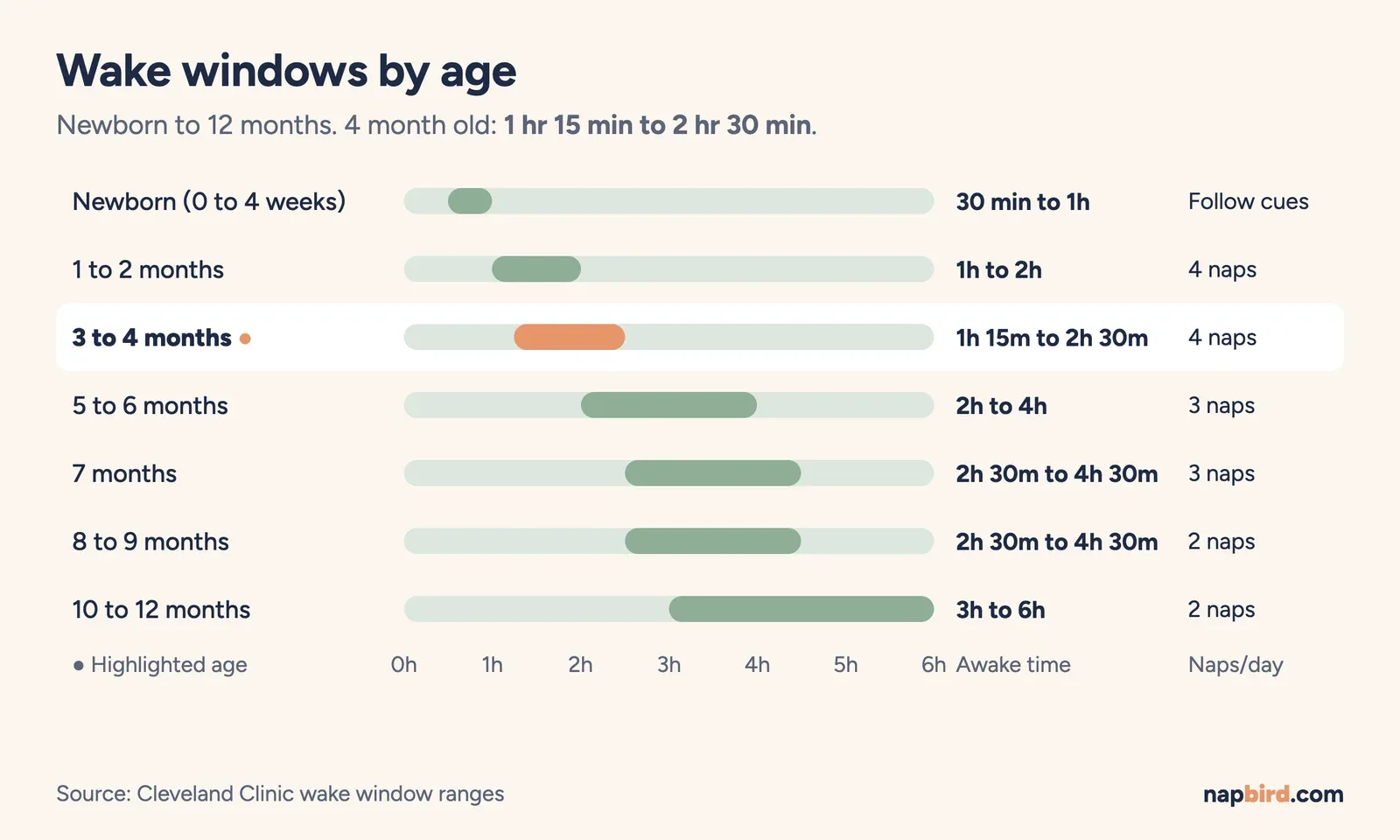
4 month old wake windows are 1 hr 15 min to 2 hr 30 min, the same range as at 3 months. What fills them changes: more rolling, reaching and staring at everything in the room, all squeezed between feeds and four naps.
The counterintuitive part: after a short nap, the next window should be shorter, not longer. It feels logical to keep a baby up longer so they are "really tired" next time, but a baby who woke early from a nap woke still tired. Offering the next nap near the 1 hr 15 min end of the range usually goes better than pushing toward 2 hr 30 min.
| 4 month old at a glance | |
|---|---|
| Wake window | 1 hr 15 min to 2 hr 30 min (Cleveland Clinic) |
| Naps per day | 4 |
| Usual nap length | About 45 min |
| Total sleep in 24 h | 12 to 16 hours (AASM) |
| Sample bedtime (7:00 am wake) | 7:10 pm |
4 month old nap calculator
Wake window calculator · dates stay in your browser
Free · No account needed
4 month old example · 7:00 am wake-up
4 months · 1 hr 15 min to 2 hr 30 min awake
Wake
7:00 am
Nap 1
8:20 to 9:05 am
About 45 min
Nap 2
10:40 to 11:25 am
About 45 min
Nap 3
1:15 to 2:00 pm
About 45 min
Nap 4
4:05 to 4:50 pm
About 45 min
Bedtime
7:10 to 7:20 pm
Example nap lengths adjust within 30-120 min to fit the day. Wake ranges: Cleveland Clinic.
Get my nap planSample 4 month old schedule (7:00 am wake-up)
Starting from a 7:00 am wake, the calculator lays out four naps of about 45 minutes and a 7:10 pm bedtime. Each window is a little longer than the last.
| Time | What | Awake before it |
|---|---|---|
| 7:00 am | Wake up | Start of the day |
| 8:20 am | Nap 1 (about 45 min) | 1 hr 20 min |
| 10:40 am | Nap 2 (about 45 min) | 1 hr 35 min |
| 1:15 pm | Nap 3 (about 45 min) | 1 hr 50 min |
| 4:05 pm | Nap 4 (about 45 min) | 2 hr 5 min |
| 7:10 pm | Bedtime | 2 hr 20 min |
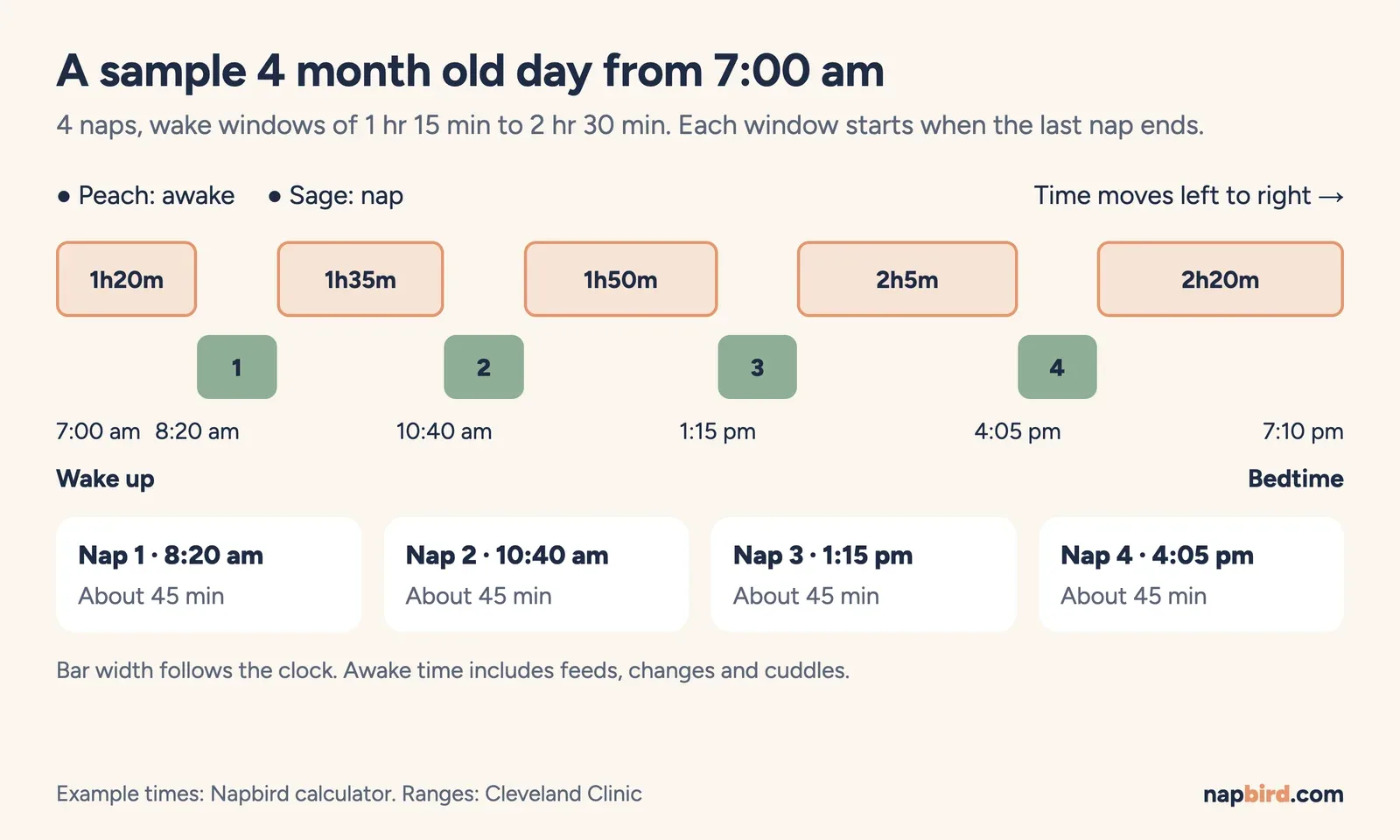
Read the table as one good day, not a target. Four month naps vary a lot from one day to the next, so the real schedule is whatever happens after you count from each actual wake.
How many naps does a 4 month old need?
A 4 month old usually needs 4 naps a day, and that is where the calculator starts. With windows still under 2 hr 30 min, four rests are what it takes to get from a 7:00 am wake to an evening bedtime.
Short naps make this feel like a treadmill: you sit down after settling one nap and it seems the baby is already awake. Keep the window after a short nap simple. Feed if needed, change, a cuddle, a few minutes of play while your baby is bright, then back toward sleep. Save the outing or the visit for the window after a longer nap, when there is more room.
If one day ends up with three naps because they ran long, that is fine. The count follows the day, not the other way around.
What about the 4 month sleep regression?
The 4 month sleep regression is the name many parents use for a stretch when naps get shorter or settling takes longer, and the wake window range does not change through it: still 1 hr 15 min to 2 hr 30 min.
Not every baby has a noticeable change, and not every short nap is a sign of one. Your baby is also far more interested in the room now, which alone can make settling harder. What tends to help is less, not more: a quieter room before naps, the same familiar steps in the same order, and feeding whenever your baby is hungry without worrying that it breaks the routine. Feeding counts as awake time, so if your baby looks sleepy after a feed, you can go straight into settling.
If night waking increases, resist the urge to stretch the daytime windows to compensate. Keep counting from real wakes, keep the wind-down the same, and if the pattern worries you, bring a few days of notes to your pediatrician.
What does a good awake stretch look like at 4 months?
A good 4 month old awake stretch has a feed, a change and a burst of floor play, with the liveliest part early and a quiet landing at the end.

Floor time is the star at this age. Tummy time with a toy just out of reach, rolling practice on a blanket on the floor, batting at a hanging toy, a mirror to look into: these give your baby plenty to do in a short window. Talk them through it; your face is still their favorite thing in the room.
Because everything is so interesting, a 4 month old can look wide awake right up to the moment they melt down. Build in a quiet end on purpose: move away from the toys a few minutes before you expect the nap and let your baby look out of a window or at you instead.
4 month old sleepy cues: early and late
At 4 months, early sleepy cues look like losing interest: looking away from the toy, a long stare, eye rubbing, a yawn. Late cues are fussing that climbs, arching and crying.
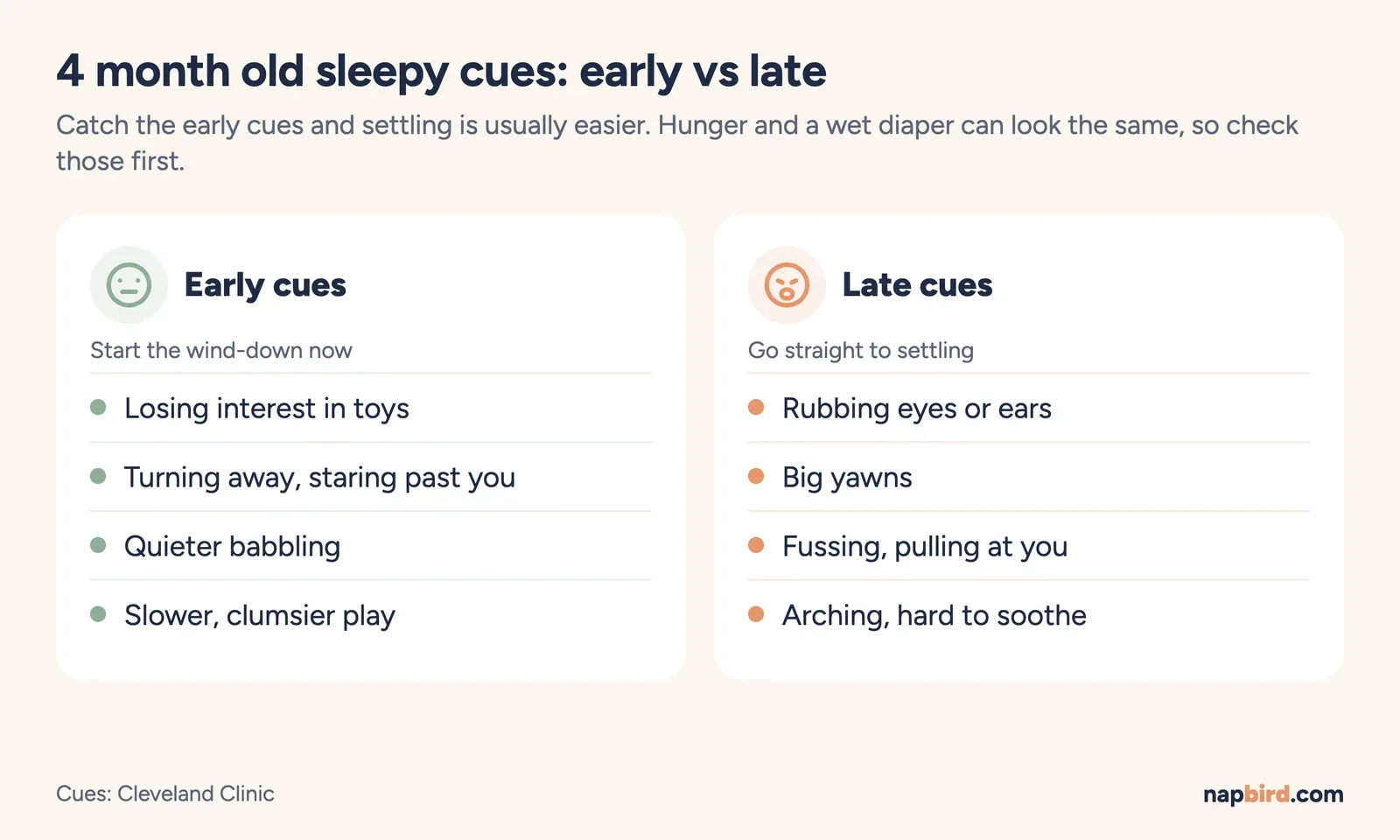
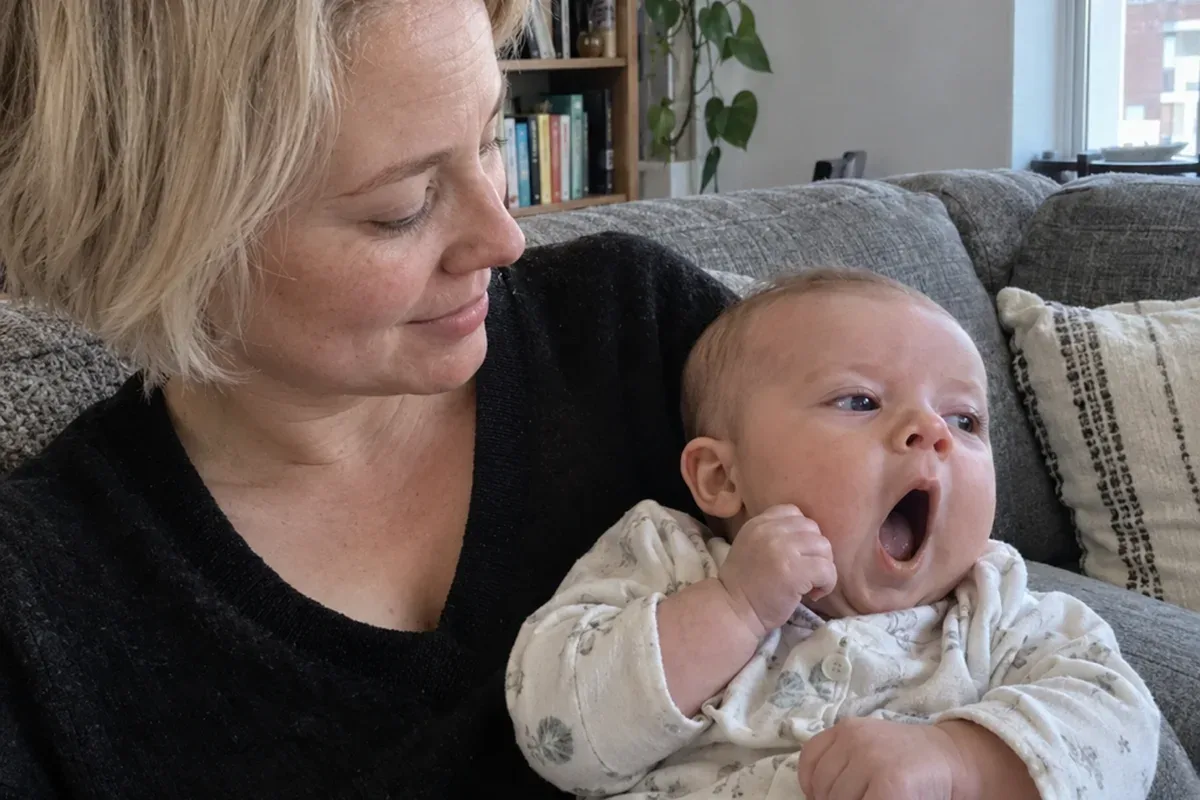
The tricky one at 4 months is the "second wind": a baby who looked sleepy, got picked up and suddenly seems bright again. If you saw an early cue, trust it and start the wind-down anyway.
| Early cue | What to do |
|---|---|
| Losing interest in a favorite toy | Put the toys away and dim the room |
| Rubbing an eye | Change the diaper and start your routine |
| A long stare at nothing | Speak softly and stop new activity |
| Sudden burst of energy after a cue | Keep going with the wind-down anyway |
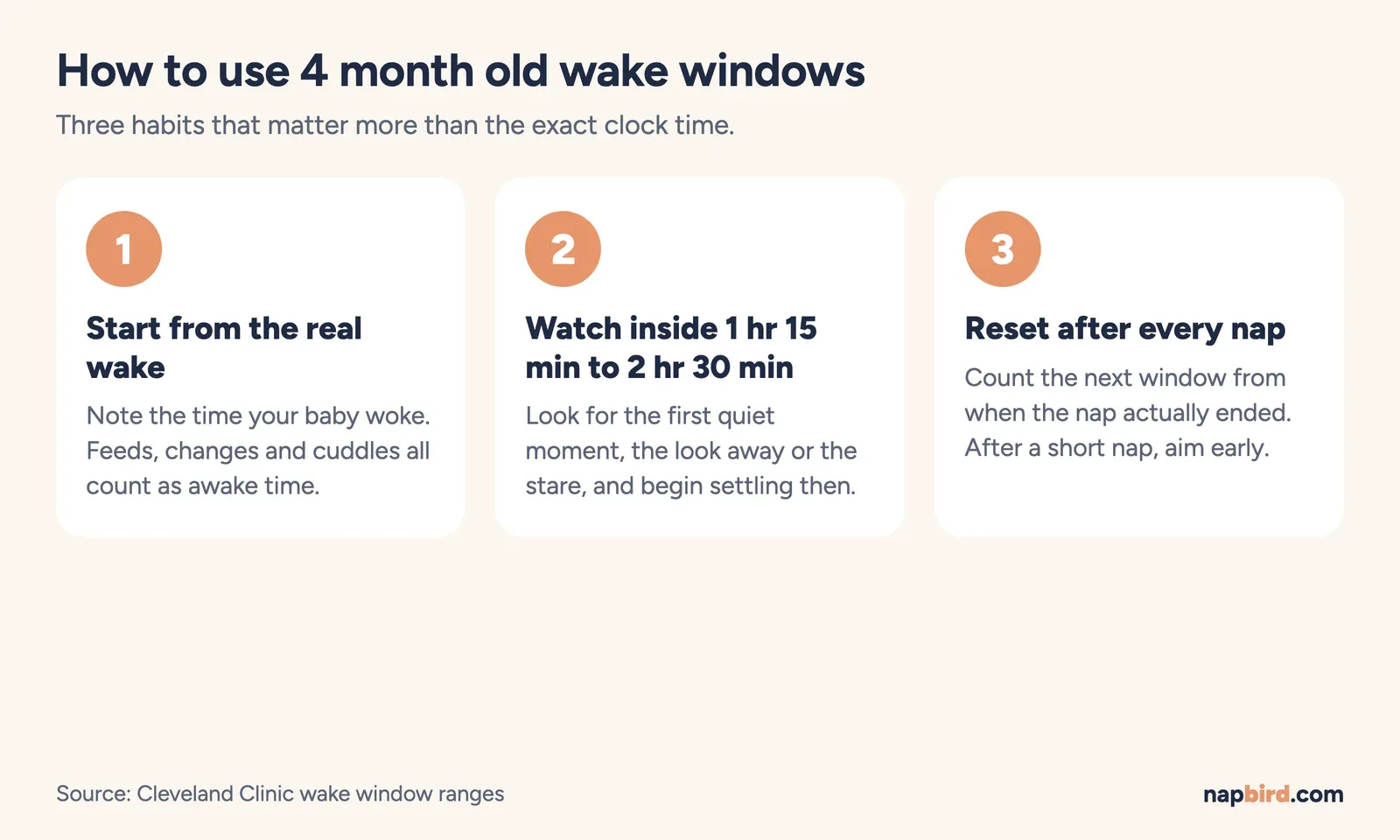
How to use 4 month old wake windows
- Start from the real wake
Write down or remember when your baby woke, morning and after each nap. That is the zero point for every window.
- Watch for the quiet moment inside 1 hr 15 min to 2 hr 30 min
Look early in the morning and after short naps, later after long ones. The cue usually arrives before the clock does.
- Count the next window from the nap that actually happened
If the nap was short, plan the next one near the start of the range. If it was long, you have more room.
- Wind down before fussing builds
Begin the familiar steps at the first early cue so your baby is calm, not crying, when you lay them down.
What if the day goes off plan?
At 4 months the plan goes off more often than not, so pick the row that matches the last nap and adjust only what comes next.
| Situation | What to try for the next window |
|---|---|
| Short nap under 30 min | Aim near 1 hr 15 min for the next nap, not the long end |
| Long nap | Use the later wake; the fourth nap may shorten or drop that day |
| Early morning wake | Keep the first window short and accept an earlier first nap |
| Skipped nap | Offer a quiet cuddle in a dim room, then try again soon or move bedtime earlier |
| Born 3+ weeks early | Use adjusted age, which may point you to the 3 month guide |
| Sick or teething day | Shorter windows, more comfort, and call your pediatrician with concerns |
The skipped last nap deserves a word of its own. If your 4 month old will not take the fourth nap, an earlier, calm bedtime often fits better than a long, tense attempt to get one more nap in. Count the evening from the end of the last real nap.
A wind-down that works at 4 months
A 4 month old wind-down works best when it takes your baby away from the busy room and repeats the same few steps before every nap.
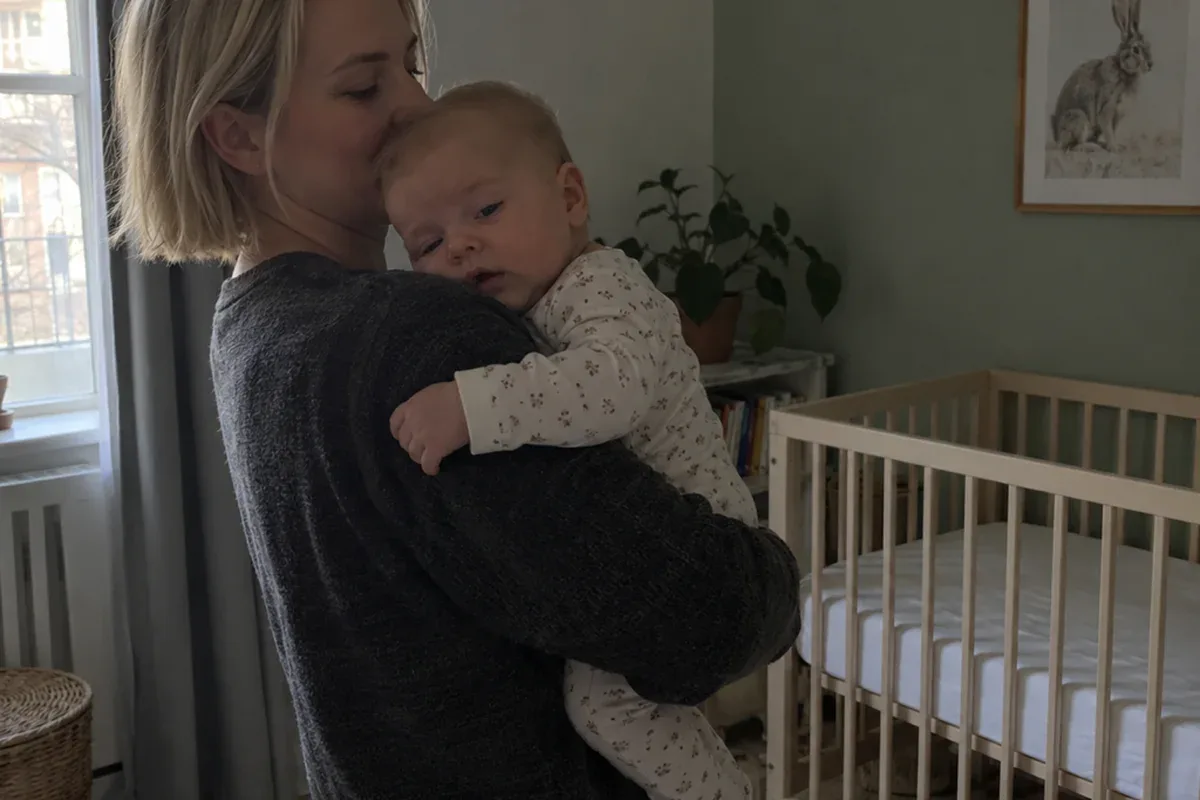
Distraction is the main opponent now, so the routine is mostly about lowering the volume of the world. Short is fine. Familiar is what matters.
- Leave the busy room and draw the curtains.
- Diaper change and sleep sack, quietly.
- One short book or the same song, every time.
- A slow sway, then lay your baby down on their back while drowsy.
Common 4 month old wake window mistakes
- Stretching the window after a short nap. Short nap, shorter next window.
- Reading every short nap as a regression. Look at the pattern over several days, not one nap.
- Adding new settling tricks every day. Keep the same steps so your baby can learn them.
- Fighting for the fourth nap at all costs. An earlier bedtime can stand in for it.
- Ending play at the last minute. Build a quiet landing into the end of each window.
Why a chart stops working (and what to do instead)
A range of 1 hr 15 min to 2 hr 30 min is a wide target, and at 4 months your baby can sit at either end of it on the same day. Short naps move the whole afternoon, babies change week to week, and at 3am no one can work out when the next nap should be.
The free calculator above recalculates from today's real wake and nap times, so each short nap updates the rest of the day for you. A nap plan builds on that and adapts the schedule as your baby's naps change.
What changes next: 4 month old to 5 month old
The jump from 4 to 5 months is bigger than the one before it: the range widens to 2 to 4 hours and the starting plan drops from four naps to three.
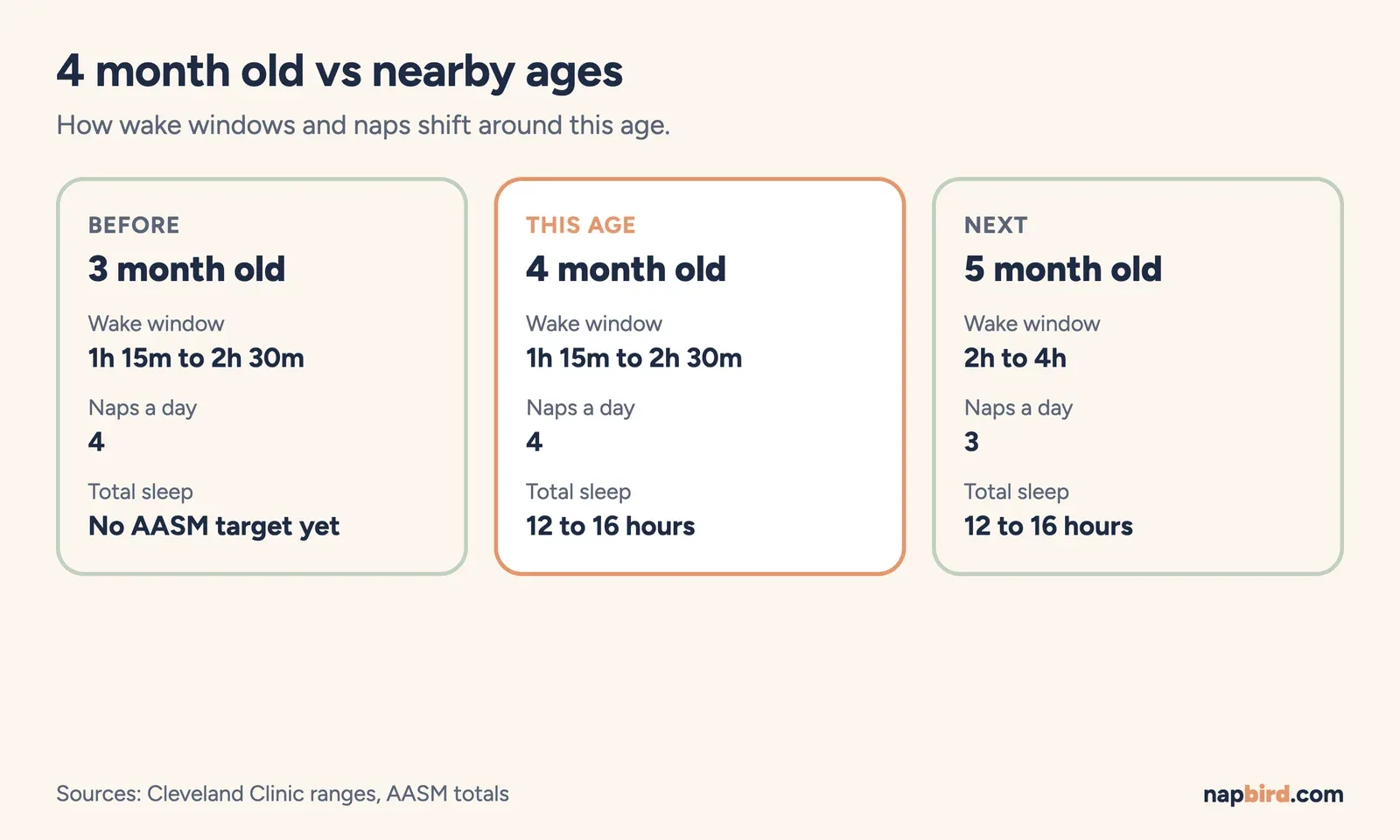
If your days still look young, 3 month old wake windows use the same range, so nothing needs to change in a hurry. When the fourth nap gets hard to fit because the earlier naps lengthen, that is the sign the day is moving toward 5 month old wake windows and a three nap rhythm. A month after that, 6 month old wake windows keep three naps with clearer morning and afternoon stretches.
The wake window chart shows all the age bands together, and a printable wake window chart is there if you want one on the wall.
How do I keep 4 month old naps safe?
Keep 4 month old naps safe by using the same setup as night sleep every time: on the back, alone, in a crib or bassinet, on a firm, flat surface.
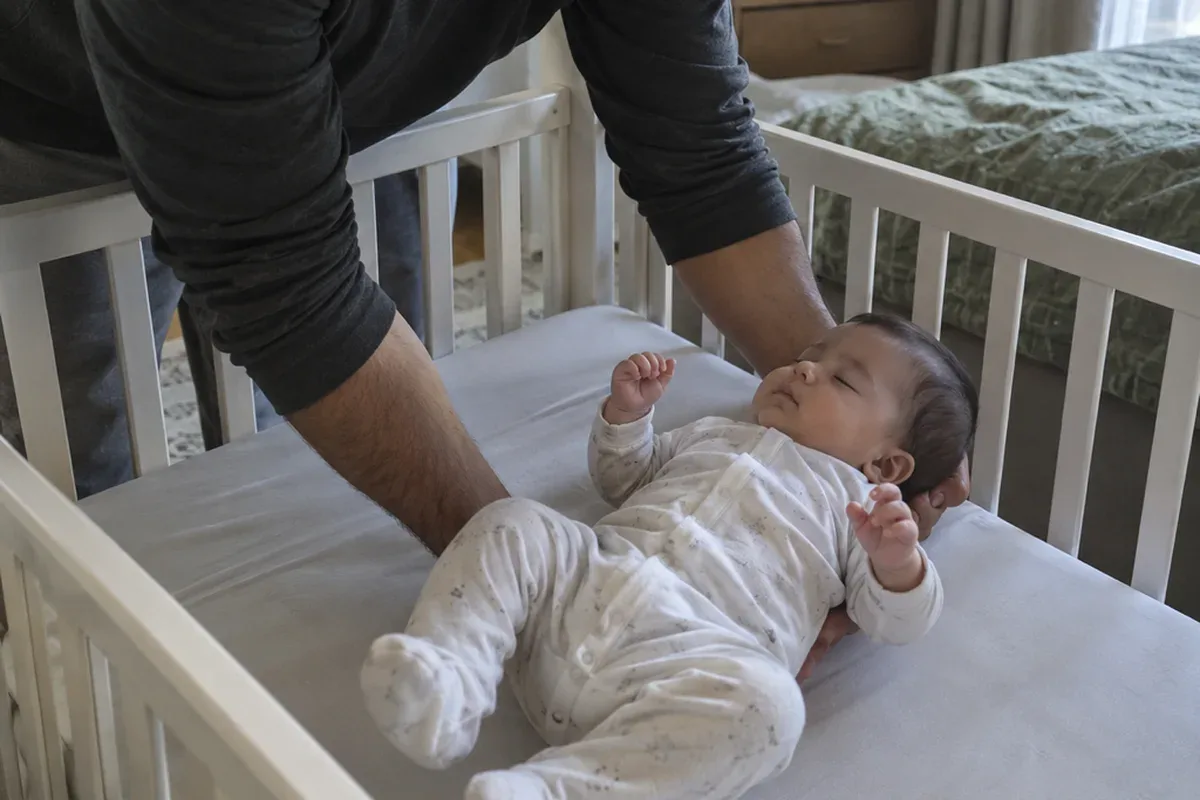
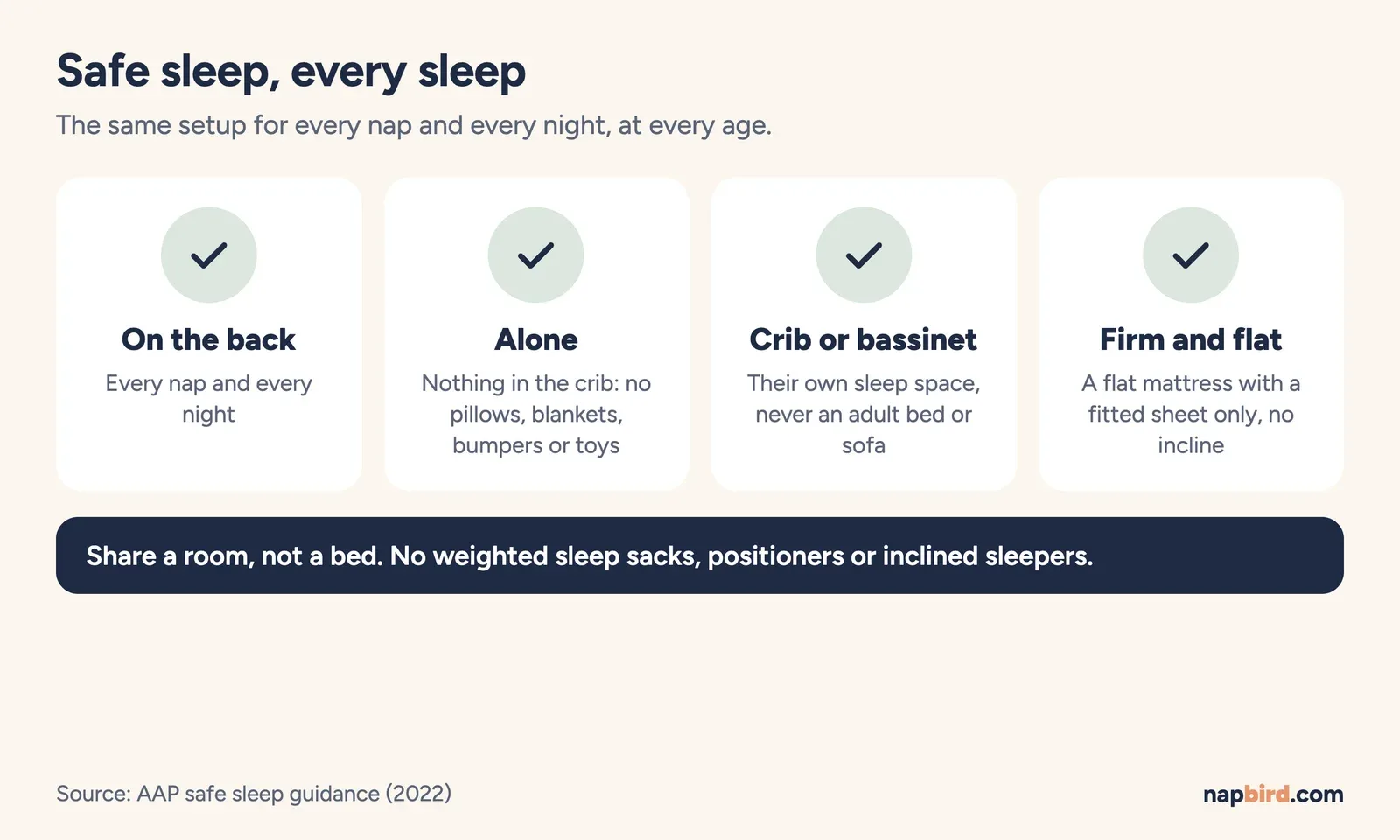
If your baby is starting to roll, that is one more reason to keep the crib bare. The AAP safe sleep guidance comes down to four rules:
- Always place your baby on their back to sleep, for naps and nights.
- Alone: nothing in the crib, no pillows, blankets, bumpers or toys.
- In a crib or bassinet with a firm, flat mattress and a fitted sheet.
- Share a room, not a bed.
For fever, pauses in breathing, blue or gray lips, difficulty waking, or unusual sleepiness with poor feeding, call your pediatrician, or emergency services if it feels urgent.
A guide, not medical advice.
4 month old wake windows stay at 1 hr 15 min to 2 hr 30 min, even through the stretch people call the 4 month sleep regression. The one habit to keep: after a short nap, offer the next one sooner, not later. Put today's wake time into the calculator above, or get a nap plan that adjusts as the naps do.
Frequently asked questions
Cleveland Clinic lists 1 hr 15 min to 2 hr 30 min for the 3 to 4 month band. Start watching for cues near the short end in the morning and after any nap that leaves your baby still tired.
No. A short nap tells you how that one sleep went. Look at how your baby seems afterward and at the pattern across several days before deciding anything has changed.
The AASM recommends 12 to 16 hours of total sleep in 24 hours for ages 4 to 12 months, naps included. Add daytime sleep to the night when you look at the whole day.
Usually the opposite. If naps were short and your baby seems tired, start winding down sooner and let bedtime come a little earlier.
More night waking on its own is not a reason to stretch daytime windows. Look at feeds, comfort, real naps and sleepy cues together, and keep simple notes if the pattern continues.
Count the evening from the end of the last real nap. A calm, earlier bedtime often fits better than a long struggle for one more nap.
Share article
About the author
Founder and editor
Oleh Onysko founded Napbird and builds the wake window calculator. He edits every guide against the pediatric sources cited on each page. He is not a doctor or a sleep consultant, so Napbird is a guide, not medical advice.
More baby sleep guides

Wake windows & schedules · 10 min
10 Month Old Wake Windows: 3 to 6 Hours + Sample Day
10 month old wake windows widen to 3 to 6 hours, yet the sample two-nap day stays close to 3 hours per stretch. Here is how to use the wider range without overtiring a cruising baby, plus cues, a wind-down and safe sleep basics.

Wake windows & schedules · 10 min
11 Month Old Wake Windows: 3 to 6 Hours + 2 Nap Schedule
11 month old wake windows are 3 to 6 hours, usually with two naps. The last window before bed is the longest, so bedtime trouble often starts with when the afternoon nap ended. Sample day, cues, daycare tips and safe sleep inside.

Wake windows & schedules · 10 min
12 Month Old Wake Windows: 3 to 6 Hours + Nap Guide
12 month old wake windows are 3 to 6 hours, and most first birthdays still come with two naps. The total sleep guidance changes at one year; the nap count does not have to. A cue-led day, sleepy cues and signs of the slow move toward one nap.

Wake windows & schedules · 11 min
1 Month Old Wake Windows: 1 to 2 Hours + Sample Day
1 month old wake windows are 1 to 2 hours, and the first window of the morning is usually the shortest one. See a sample 4 nap day from 7:00 am, the early sleepy cues and what to do when the day goes off plan.

Wake windows & schedules · 11 min
2 Month Old Wake Windows: 1 to 2 Hours + Nap Schedule
2 month old wake windows are 1 to 2 hours, and a smiling, chatty baby can still be at the end of one. See a sample 4 nap day, the sleepy cues that show up mid play and what to do when naps run short.

Wake windows & schedules · 12 min
3 Month Old Wake Windows: 1h 15m to 2h 30m + 4 Nap Day
3 month old wake windows run 1 hr 15 min to 2 hr 30 min, and the clock starts at the wake, not after the feed. Here is the 4 nap sample day, the early cues to watch and what to do when a nap runs short.