6 Week Old Wake Windows: 1 to 2 Hours + 4 Nap Schedule
Oleh Onysko October 16, 2026 10 min read
Nap times for your 6 week old, worked out from their wake-up time.
Get my nap plan
In this article
6 week old wake windows are 1 to 2 hours. A feed, a change and a few minutes of face to face chat fill most of it, and the brighter, more alert moments your baby has now sit inside that same stretch.
Here is the one most parents get backwards at 6 weeks: after a short nap, the next window should be shorter, not longer. It feels logical to think a quick catnap means your baby "used up" less sleep and can now stay up for the full 2 hours. In practice a short nap usually leaves them less rested, so look for the next sleep toward the 1 hour end of the range, then let the windows lengthen again once a longer nap lands.
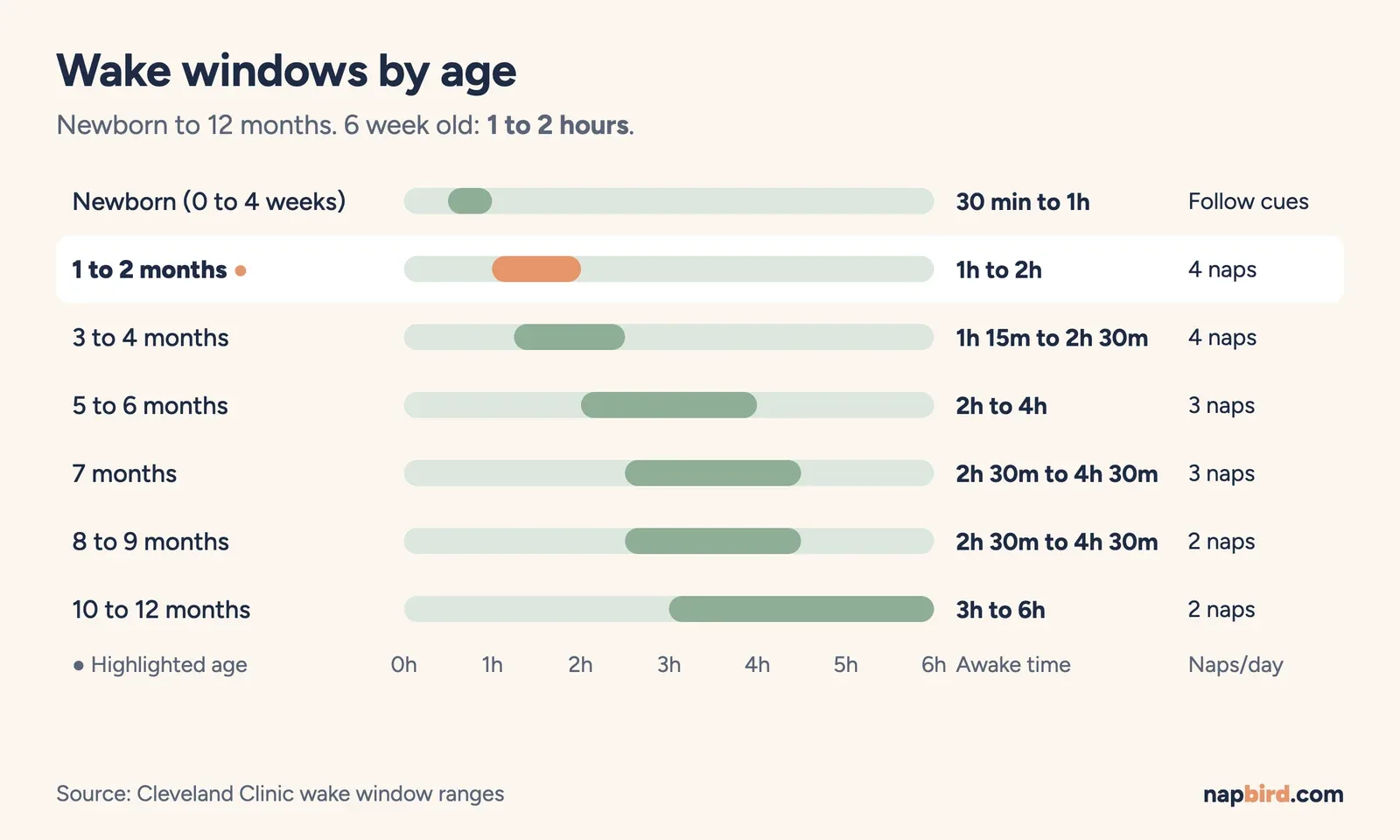
| 6 week old at a glance | |
|---|---|
| Wake window | 1 to 2 hours (Cleveland Clinic) |
| Naps per day | 4 as a starting point |
| Usual nap length | About 45 min |
| Total sleep in 24 h | No AASM target under 4 months |
| Sample bedtime (7:00 am wake) | 7:10 pm |
6 week old nap calculator
Wake window calculator · dates stay in your browser
Free · No account needed
6 week old example · 7:00 am wake-up
1 months · 1 hr to 2 hr awake
Wake
7:00 am
Nap 1
8:40 to 9:25 am
About 45 min
Nap 2
11:10 to 11:55 am
About 45 min
Nap 3
1:45 to 2:30 pm
About 45 min
Nap 4
4:25 to 5:10 pm
About 45 min
Bedtime
7:10 pm
Example nap lengths adjust within 30-120 min to fit the day. Wake ranges: Cleveland Clinic.
Get my nap planSample 6 week old schedule (7:00 am wake-up)
The calculator's sample 6 week day has 4 naps of about 45 minutes, and each awake stretch is a little longer than the one before it.
| Time | What | Awake before it |
|---|---|---|
| 7:00 am | Wake up | Start of the day |
| 8:40 am | Nap 1 (about 45 min) | 1 hr 40 min awake |
| 11:10 am | Nap 2 (about 45 min) | 1 hr 45 min awake |
| 1:45 pm | Nap 3 (about 45 min) | 1 hr 50 min awake |
| 4:25 pm | Nap 4 (about 45 min) | 1 hr 55 min awake |
| 7:10 pm | Bedtime | 2 hr awake |
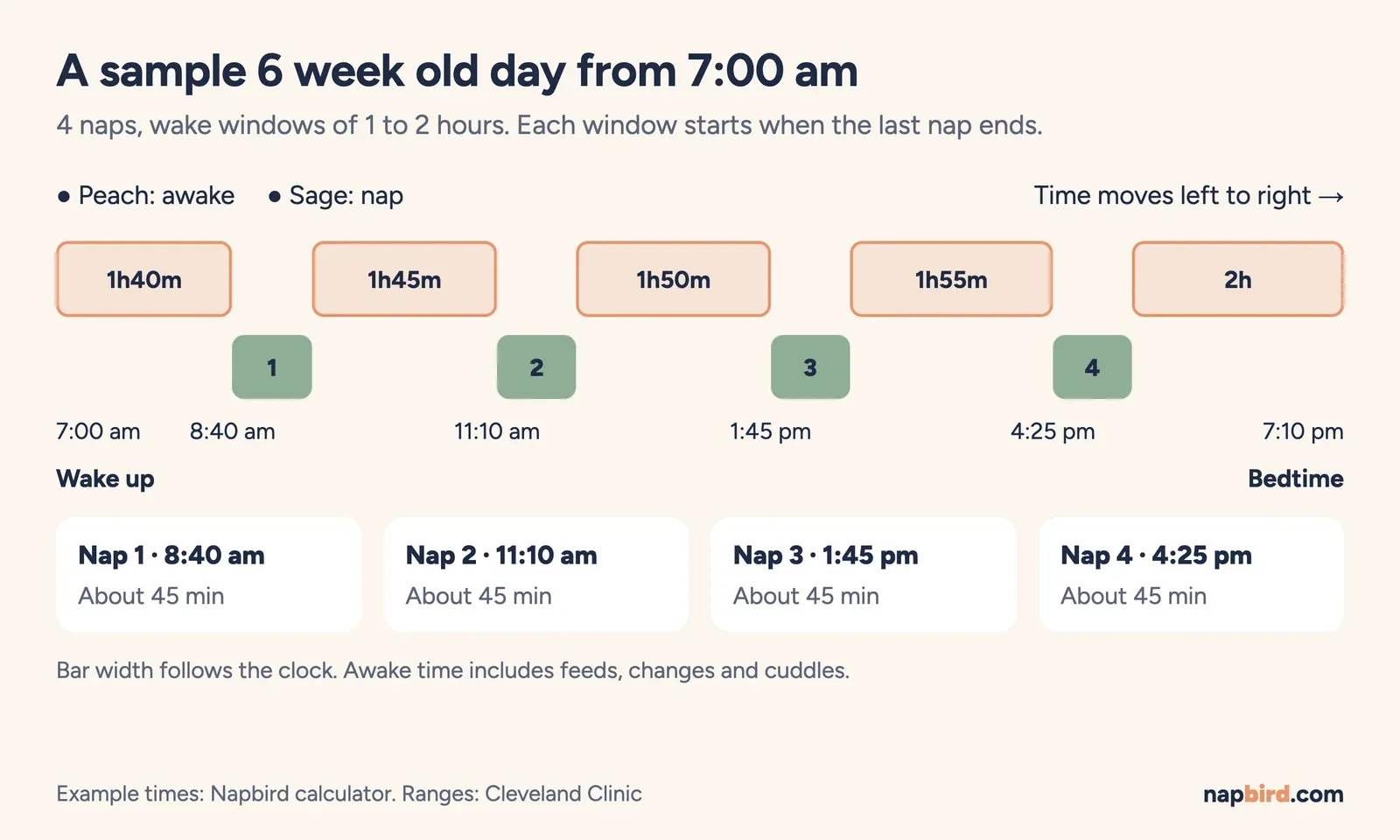
Every nap in that table is exactly 45 minutes, and real naps are not. The moment one runs short or long, the times after it move. So use the table to picture the shape of the day, then count each window from the real wake and the nap your baby actually took.
How many naps does a 6 week old need?
A 6 week old usually does well with about 4 naps as a starting point. Feeding still gives the day much of its shape, so some days will have an extra short nap and others will have a long one that swallows two.
Use the sample bedtime to picture the end of the day, then work from the naps that actually happen. If the late afternoon feels tiring for everyone, begin the evening wind-down while your baby is still fairly calm. You can make the setting quieter even while feeding and care continue.
What does a good awake stretch look like at 6 weeks?
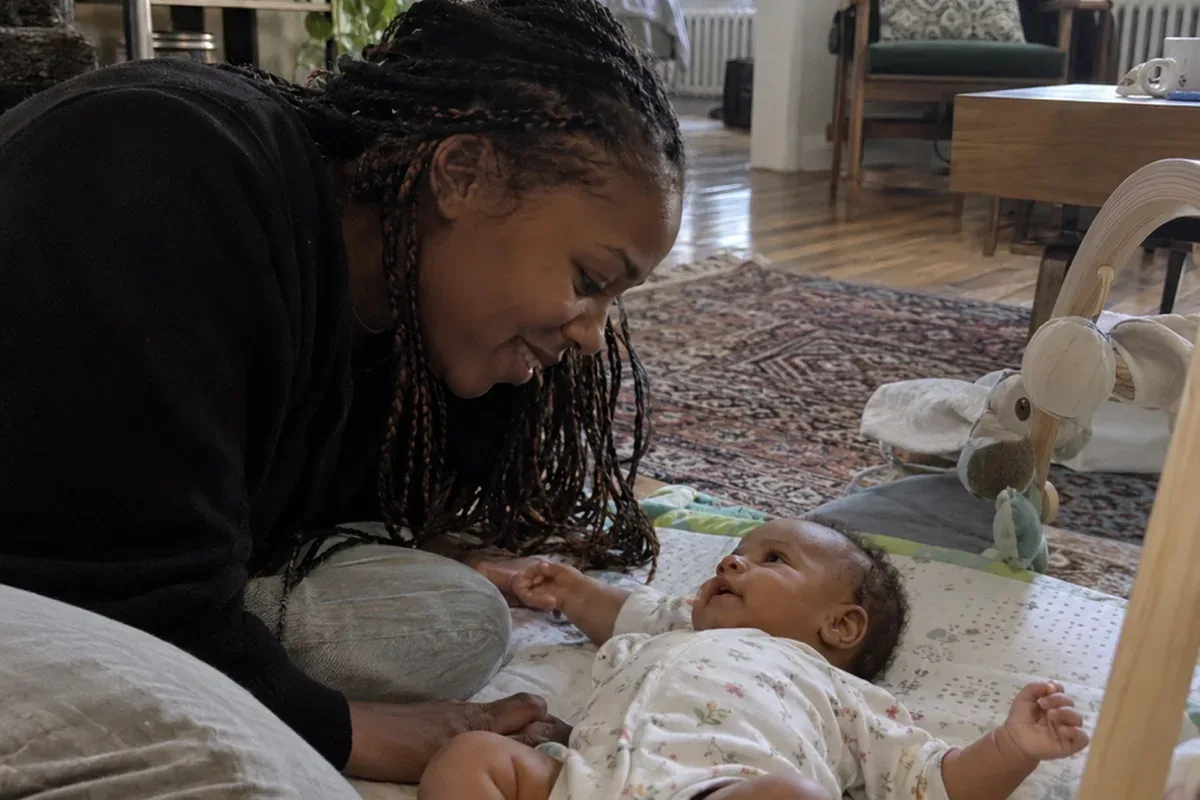
A good 6 week awake stretch has a bright middle and a quiet end. After the feed and change, your baby may watch your face and respond to your voice for a while. That is the moment for a little tummy time on the play mat or on your chest, a slow song, or a look at the trees through the window.
Keep those exchanges simple and let your baby turn away when they need a pause. A turned head is not rudeness or boredom, it is a request for less. Often the first window of the morning shows you your baby's pace most clearly: a cheerful start that shifts into sleepiness gently, without much fuss beforehand.
6 week old sleepy cues: early and late
At 6 weeks, the early sleepy cues follow a pattern: interested looking, then gazing past you, then looking away or yawning. Late cues are fussing, crying and arching, especially in the late afternoon.
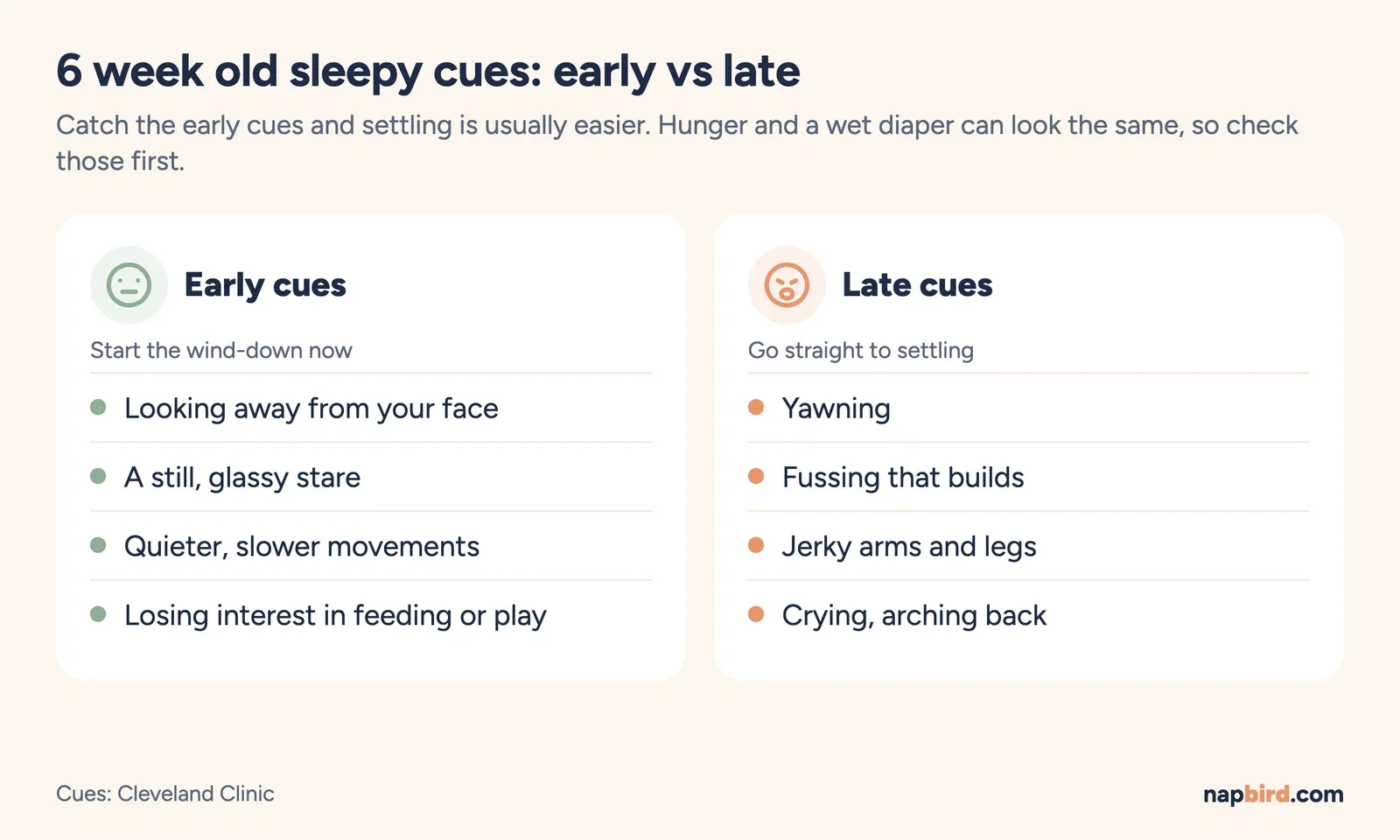
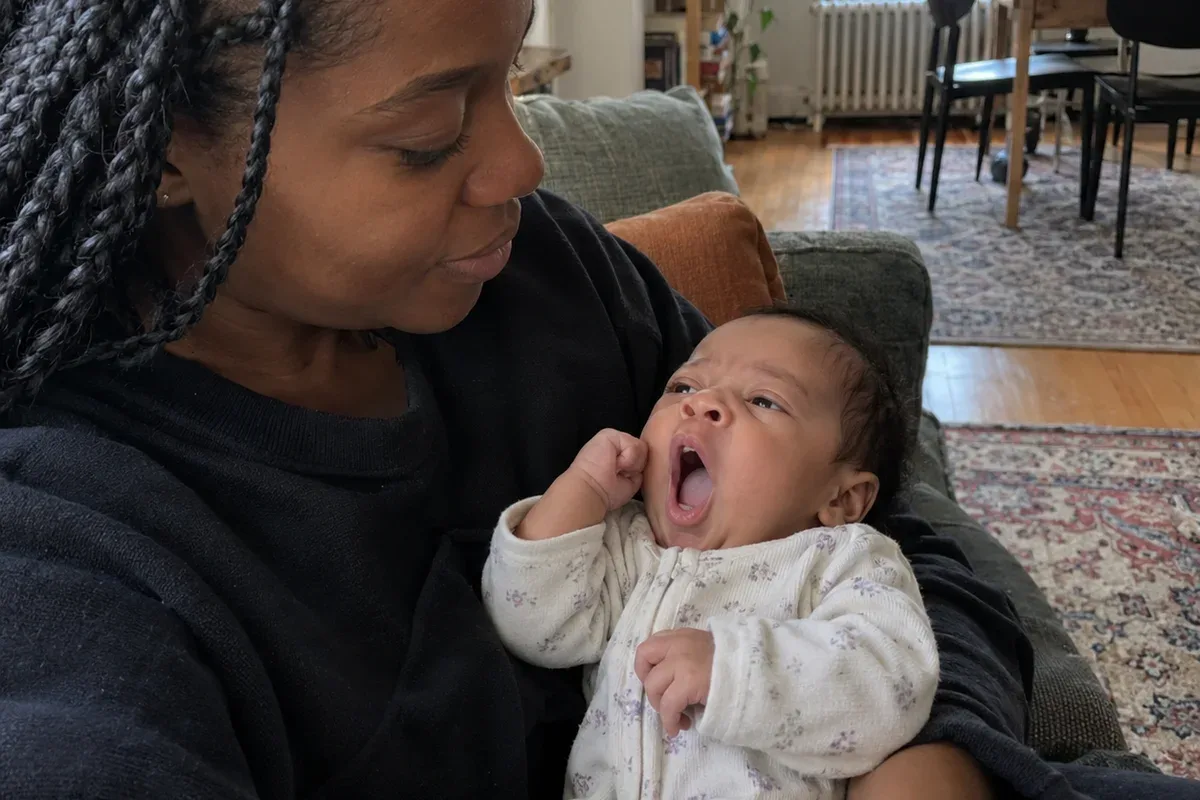
| Early cue | What to do |
|---|---|
| Gazes past your face | End the game and lower your voice |
| Looks away from the toy or song | Pick your baby up for a calm cuddle |
| Yawns after the feed | Skip extra play and go straight to settling |
| Grows quiet and still | Dim the room and start the wind-down |
If you wait until crying begins, check hunger and comfort first, then offer a quieter transition.
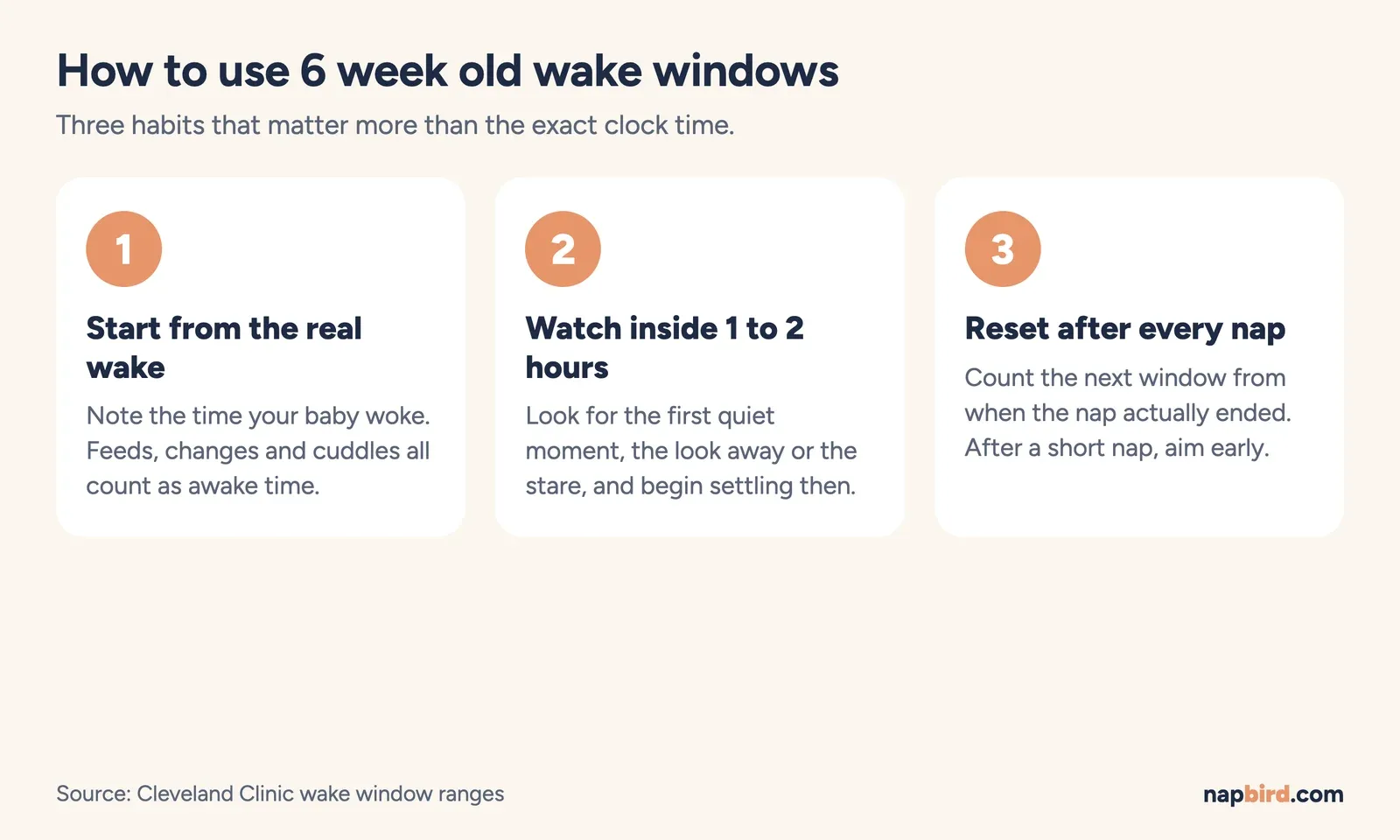
How to use 6 week old wake windows
- Start from the real wake
Note the time your baby woke, whether that is 7:00 am or earlier. The feed and the change are part of the window.
- Watch for the quiet moment inside 1 to 2 hours
Start checking for cues around 1 hour, especially after a busy feed. Many stretches will end well before the 2 hour mark.
- Count the next window from the nap that actually happened
After a short nap, the next window starts from that early wake and usually ends sooner. After a long nap, there may be more room.
- Wind down before fussing builds
Keep the routine short enough to repeat anywhere, and begin it at the first gaze past you.
What if the day goes off plan?
The sample day assumes four tidy naps. When yours does not cooperate, use this table for the next window.
| Situation | What to try for the next window |
|---|---|
| Short nap under 30 min | Shorter next window: look for cues near 1 hour |
| Long nap | Count from the real wake; the next window can run toward the longer end if cues allow |
| Early morning wake | Keep the first window short and let the whole day shift earlier |
| Skipped nap | Offer sleep at the next early cue, without waiting for the planned time |
| Born 3+ weeks early | Use adjusted age, which may make an earlier guide a better fit |
| Busy day out or appointment | Count the trip as awake time and settle quietly when you get home |
The short nap row is where most days go sideways. A 6 week old who wakes after a short nap may look happy and wide awake. Enjoy it, but start watching for the gaze past you earlier than you would after a long nap.
Appointments are the other common wrinkle. The car, the waiting room and new faces all fill the window. When you get back, pick up from what your baby needs, which is often a quiet change and a feed rather than more play.
A wind-down that works at 6 weeks
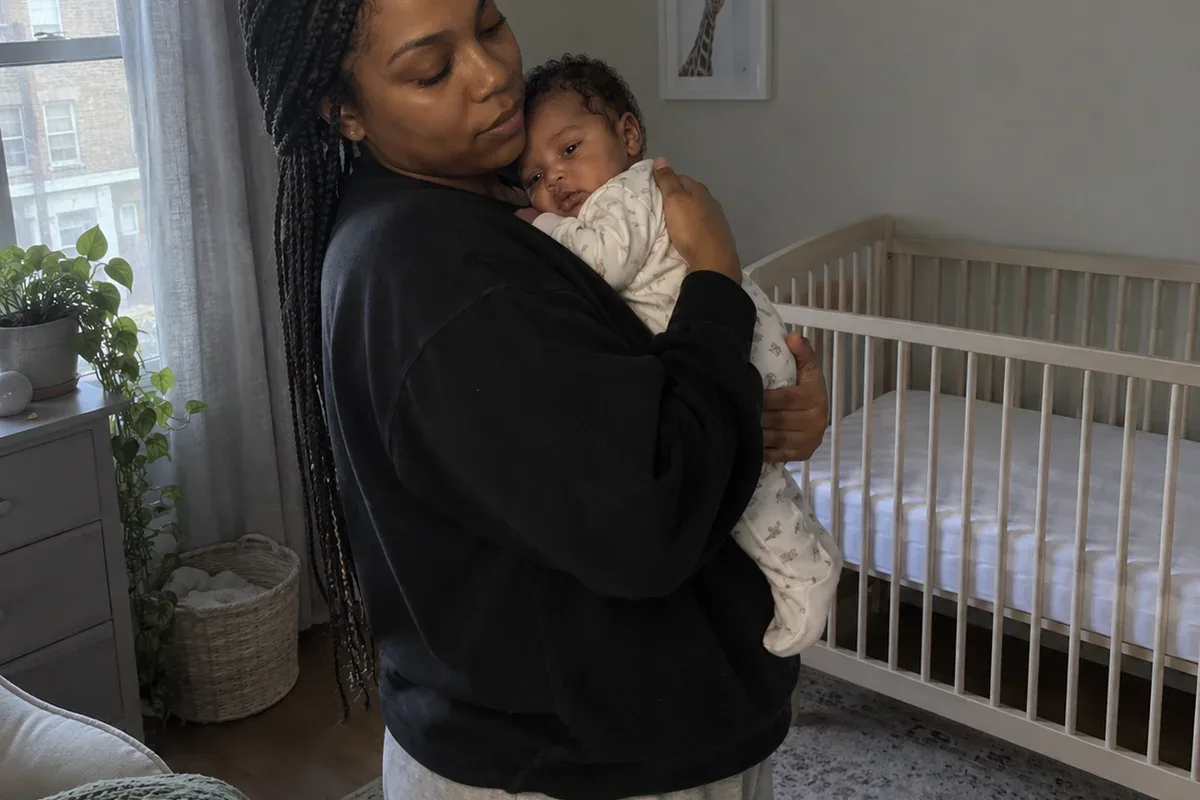
Late-day fussing can be especially hard at 6 weeks, when everyone is tired. A short, predictable wind-down helps because you can start it early, before the evening gets loud. Prepare the sleep space and supplies first, while your baby is still content.
- Lower the lights and turn off the TV.
- Fresh diaper, sleep sack on.
- Feed if your baby is hungry, then hold them upright and sway.
- Lay them on their back in the crib while drowsy, or once asleep if that works better today.
If another adult is settling the baby, tell them what helped today. Familiar handling and a calm voice are easier to keep consistent when you have a little practical support.
Common 6 week old wake window mistakes
- Stretching after a short nap. A short nap usually means an earlier next nap, not a later one.
- Adding awake time after a long feed. The feed already used part of the window; go to sleep if your baby is drowsy.
- Aiming for 2 hours every time. Two hours is the top of the range, not the goal.
- Ignoring the outing. A visit or appointment fills a window as much as play does.
- Waiting for a yawn. At 6 weeks the gaze past you usually comes first.
Why a chart stops working (and what to do instead)
A wake window chart says 1 to 2 hours, and that hour of spread is exactly where the short nap problem lives. Babies change week to week, a short nap shifts the whole afternoon, and 3am is no time for arithmetic.
The free calculator above recalculates the day from today's real wake and the naps that happened. A nap plan adapts it to your baby and keeps adjusting as they move toward 2 months.
What changes next: 6 weeks to 2 months
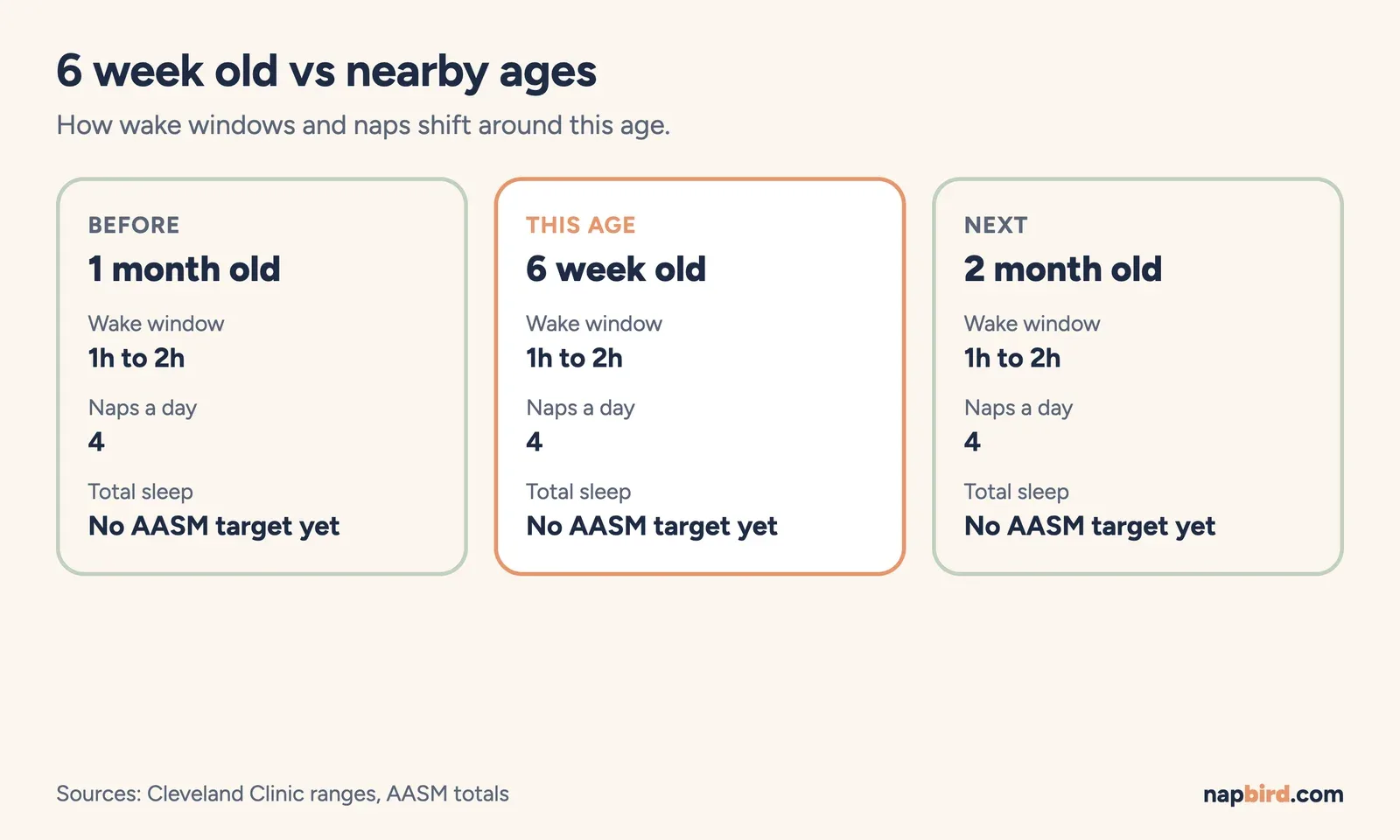
Nothing jumps on the chart between 1 month old wake windows and here: both use 1 to 2 hours and about 4 naps. If your days still feel feeding-led and less organized than the sample, the approach in 3 week old wake windows may suit today better.
Looking ahead, 2 month old wake windows stay in the same range too. Your baby may spend longer watching what happens around them, and a predictable order, wake, care, a little company, then wind down, starts to matter more than any clock time. Keep the printable wake window chart handy for the stages after that.
How do I keep 6 week old naps safe?
Place your 6 week old on their back, alone, in a crib or bassinet with a firm, flat mattress for every nap.
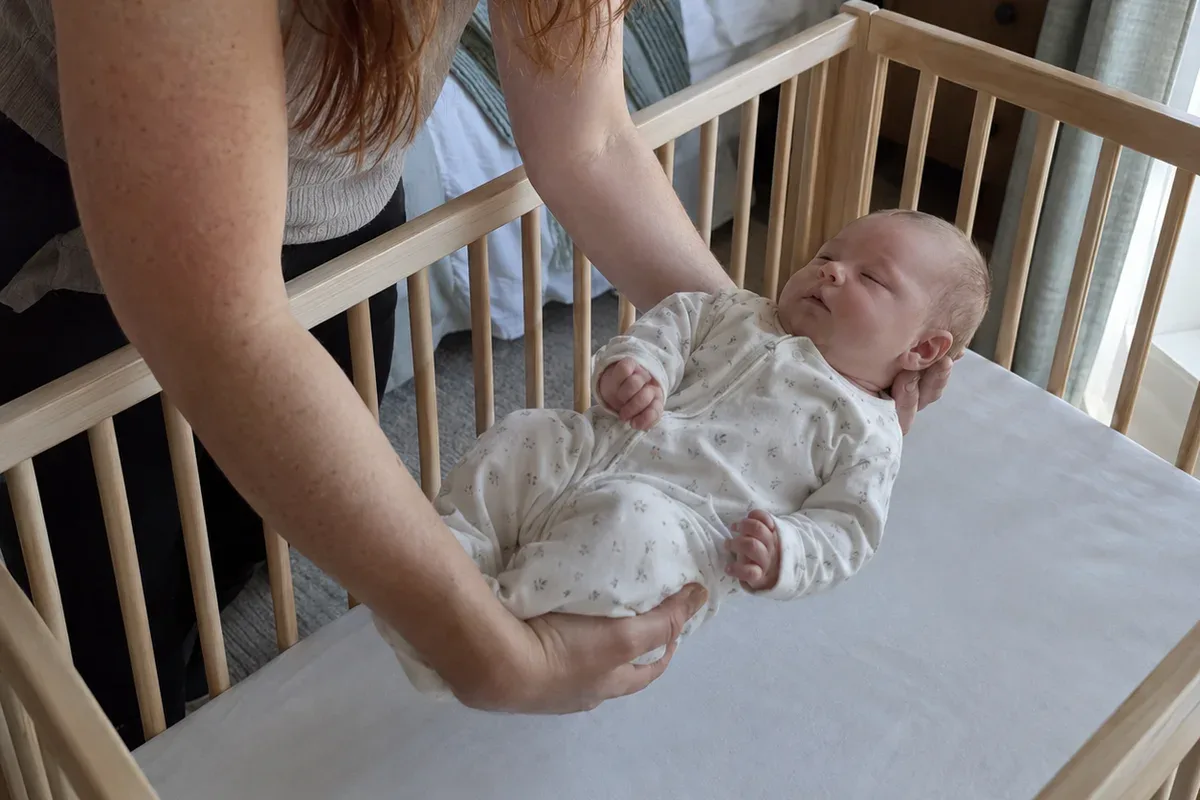
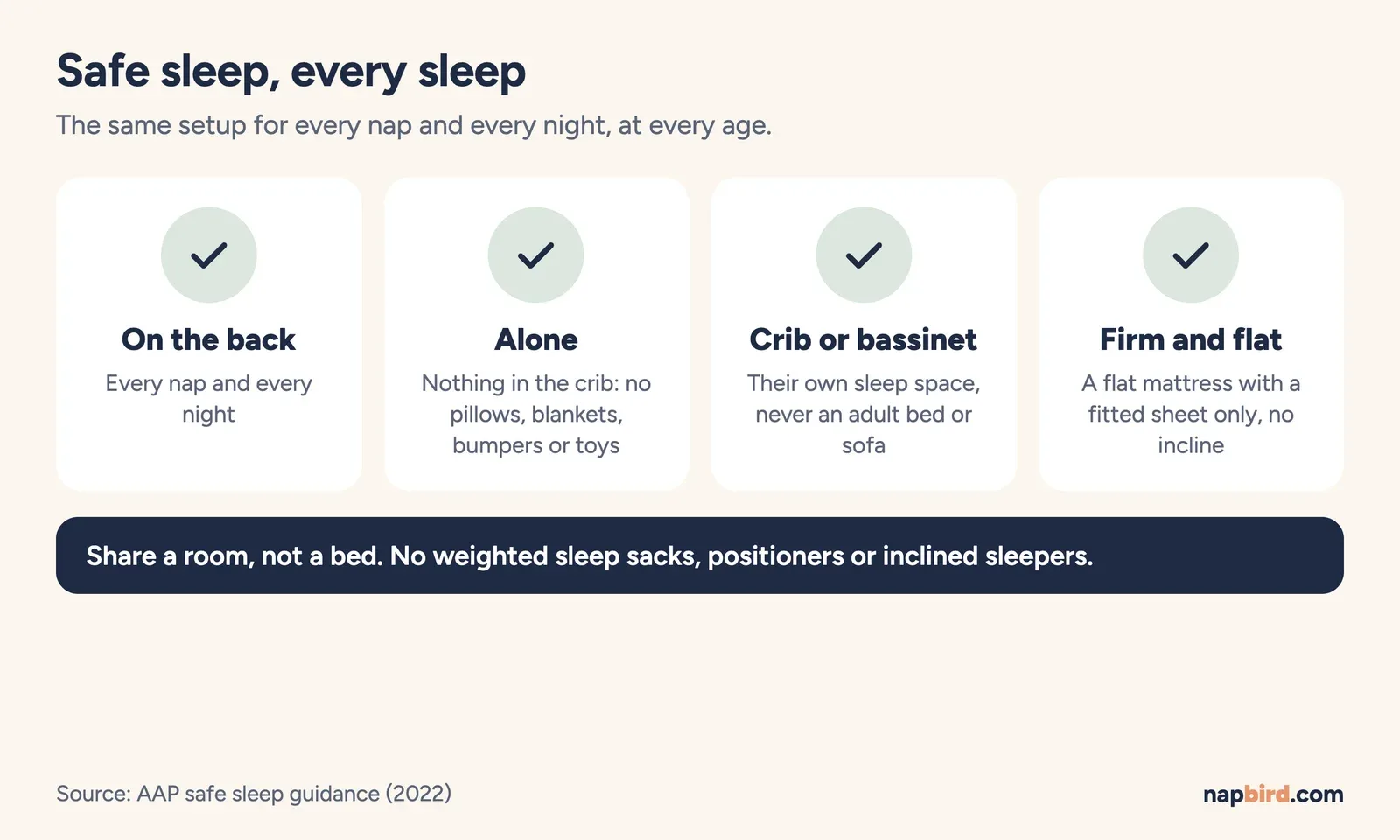
The AAP parent guide to safe sleep boils down to:
- On the back for every sleep.
- Alone in the crib or bassinet, with only a fitted sheet.
- A firm, flat surface: no inclined sleepers, positioners, pillows, bumpers or blankets.
- Share a room, not a bed, and move your baby to their own space if you feel yourself dozing during a feed.
For fever, pauses in breathing, blue or gray lips, difficulty waking, or unusual sleepiness with poor feeding, call your pediatrician, or emergency services if it feels urgent.
A guide, not medical advice.
6 week old wake windows are 1 to 2 hours, and a short nap makes the next one shorter, not longer. Count from the real wake and settle at the first gaze past you. Use the calculator above to rebuild today from the naps that happened, or get a nap plan that does it for you.
Frequently asked questions
About 1 to 2 hours, the Cleveland Clinic range for 1 to 3 months. Start checking for tiredness toward the shorter end, especially after a busy feed or the first waking of the morning.
They use the same range, but alertness varies from baby to baby. Treat 1 to 2 hours as a reference and let your baby's response after feeding decide when to settle.
No. A long feed has already used part of the window, so if your baby turns away or grows sleepy, offer a calmer setting and sleep.
Start from the real morning wake and let the times move when a nap runs short or long. Keeping the same settling steps makes the day feel familiar even when the clock varies.
A feed, change and cuddle already count. Offer a little play when your baby seems interested, then stop when they look away.
Get the sleep space and supplies ready before your baby gets very tired, keep the activity around them low, and share household jobs. A short routine is easier to repeat than a long bedtime production.
Share article
About the author
Founder and editor
Oleh Onysko founded Napbird and builds the wake window calculator. He edits every guide against the pediatric sources cited on each page. He is not a doctor or a sleep consultant, so Napbird is a guide, not medical advice.
More baby sleep guides
Wake windows & schedules · 10 min
10 Month Old Wake Windows: 3 to 6 Hours + Sample Day
10 month old wake windows widen to 3 to 6 hours, yet the sample two-nap day stays close to 3 hours per stretch. Here is how to use the wider range without overtiring a cruising baby, plus cues, a wind-down and safe sleep basics.

Wake windows & schedules · 10 min
11 Month Old Wake Windows: 3 to 6 Hours + 2 Nap Schedule
11 month old wake windows are 3 to 6 hours, usually with two naps. The last window before bed is the longest, so bedtime trouble often starts with when the afternoon nap ended. Sample day, cues, daycare tips and safe sleep inside.
Wake windows & schedules · 10 min
12 Month Old Wake Windows: 3 to 6 Hours + Nap Guide
12 month old wake windows are 3 to 6 hours, and most first birthdays still come with two naps. The total sleep guidance changes at one year; the nap count does not have to. A cue-led day, sleepy cues and signs of the slow move toward one nap.

Wake windows & schedules · 11 min
1 Month Old Wake Windows: 1 to 2 Hours + Sample Day
1 month old wake windows are 1 to 2 hours, and the first window of the morning is usually the shortest one. See a sample 4 nap day from 7:00 am, the early sleepy cues and what to do when the day goes off plan.
Wake windows & schedules · 11 min
2 Month Old Wake Windows: 1 to 2 Hours + Nap Schedule
2 month old wake windows are 1 to 2 hours, and a smiling, chatty baby can still be at the end of one. See a sample 4 nap day, the sleepy cues that show up mid play and what to do when naps run short.

Wake windows & schedules · 12 min
3 Month Old Wake Windows: 1h 15m to 2h 30m + 4 Nap Day
3 month old wake windows run 1 hr 15 min to 2 hr 30 min, and the clock starts at the wake, not after the feed. Here is the 4 nap sample day, the early cues to watch and what to do when a nap runs short.