Newborn Sleepy Cues: Early, Mid and Late Signs to Watch
Alex Novak October 18, 2026 11 min read
Nap times for your newborn, worked out from their wake-up time.
Get my nap plan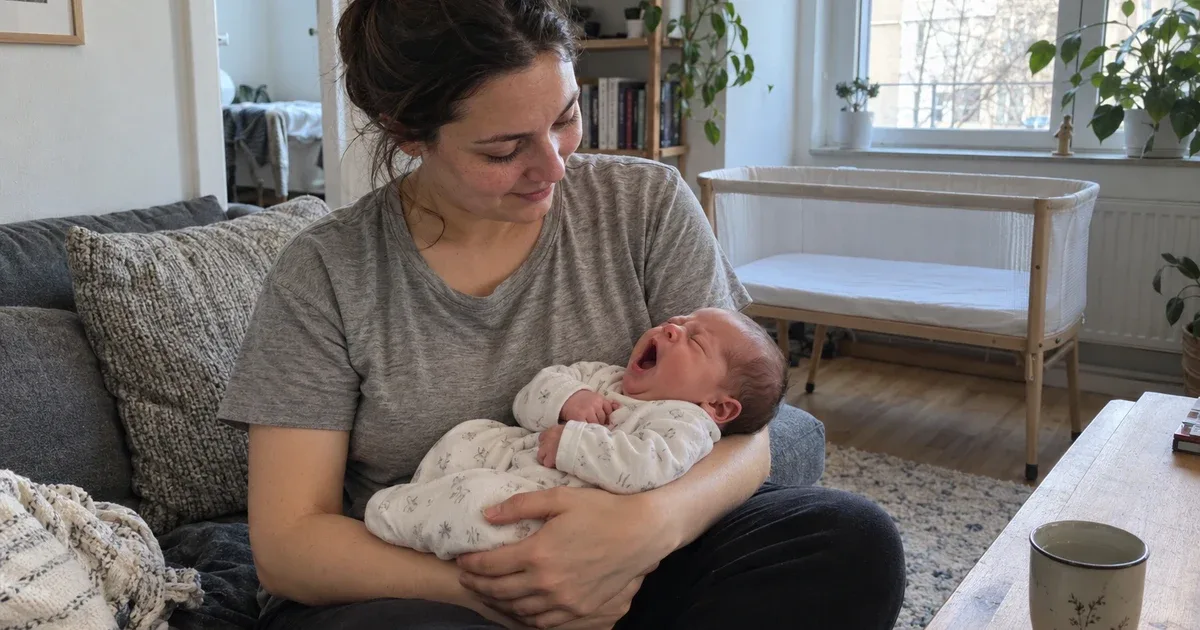
In this article
Newborn sleepy cues start quiet: a stare into the distance, stiller arms and legs, turning away from your face or the feed. Yawning and eye rubbing come next, and crying, arching and clenched fists are late cues that usually mean the best moment to settle has already passed.
Here is the part most parents have backwards: a fussy newborn who pulls off the breast or bottle is often tired, not hungry. Cleveland Clinic lists turning away from the bottle, breast, sound or light as a clear sleepy sign. Offer the feed if your baby wants it, but if they keep turning away, try the sleep instead of another round of feeding.
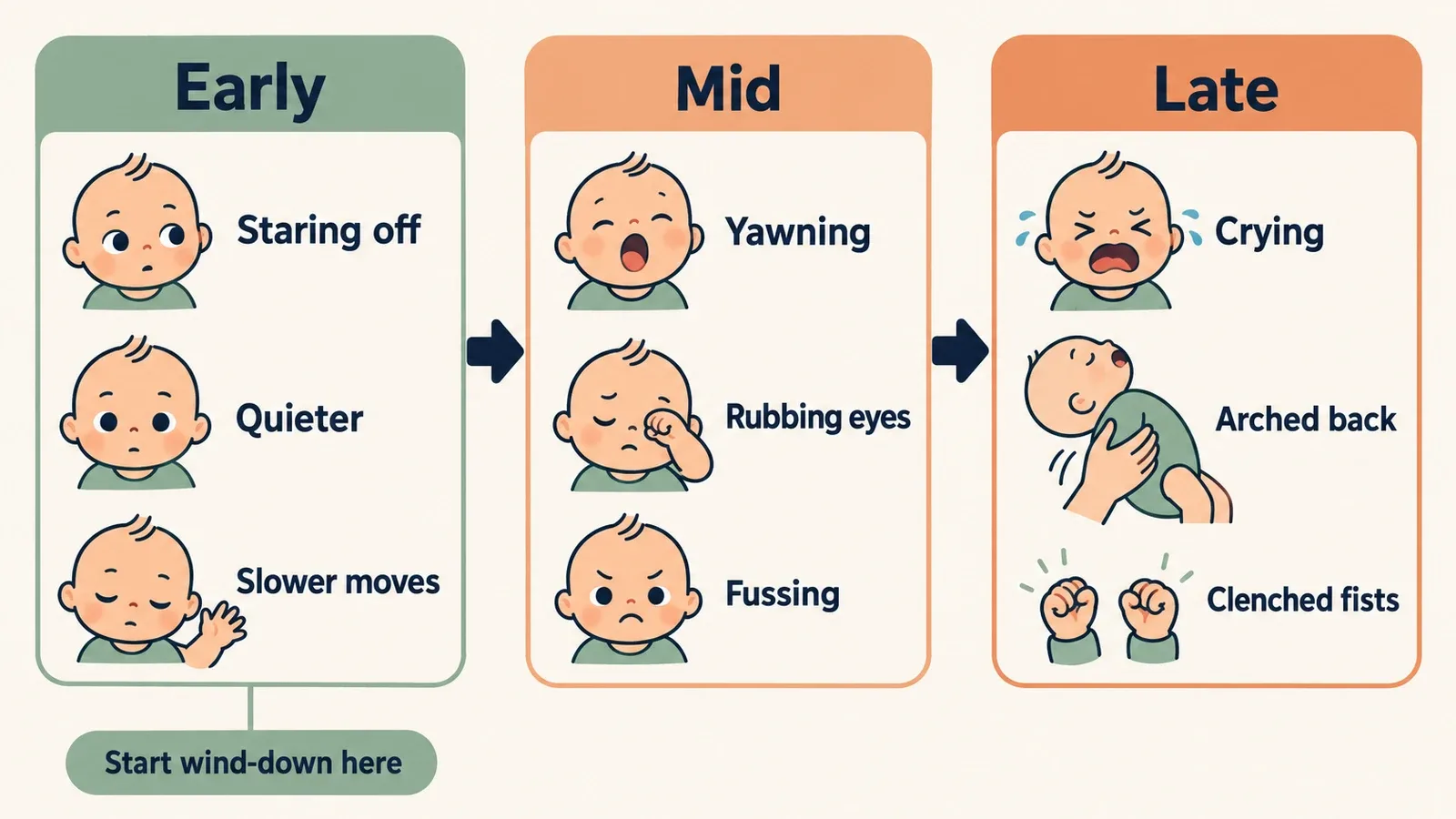
| Newborn sleepy cues at a glance | |
|---|---|
| Early cues | Staring off, quieter, slower movements, turning away |
| Mid cues | Yawning, rubbing eyes or face, pulling at ears, fussing |
| Late cues | Crying, arched back, clenched fists |
| When cues tend to show | Inside a 30 min to 1 hour wake window (Cleveland Clinic) |
| What to do at the first cue | Start the wind-down, then lay your baby down on their back |
Newborn nap calculator
Wake window calculator · dates stay in your browser
Free · No account needed
Newborn example · 7:00 am wake-up
0 months · 30 min to 1 hr awake
Wake
7:00 am
Next sleep
7:30 to 8:00 am
Newborns sleep on and off around the clock. Feed on demand and watch for sleepy cues.
Example nap lengths adjust within 30-120 min to fit the day. Wake ranges: Cleveland Clinic.
Get my nap planWhat are the early signs a newborn is tired?
The early signs a newborn is tired are the quiet ones: a long stare at nothing, a stiller body, and less interest in faces, lights and sounds. They are easy to miss because they look like calm.
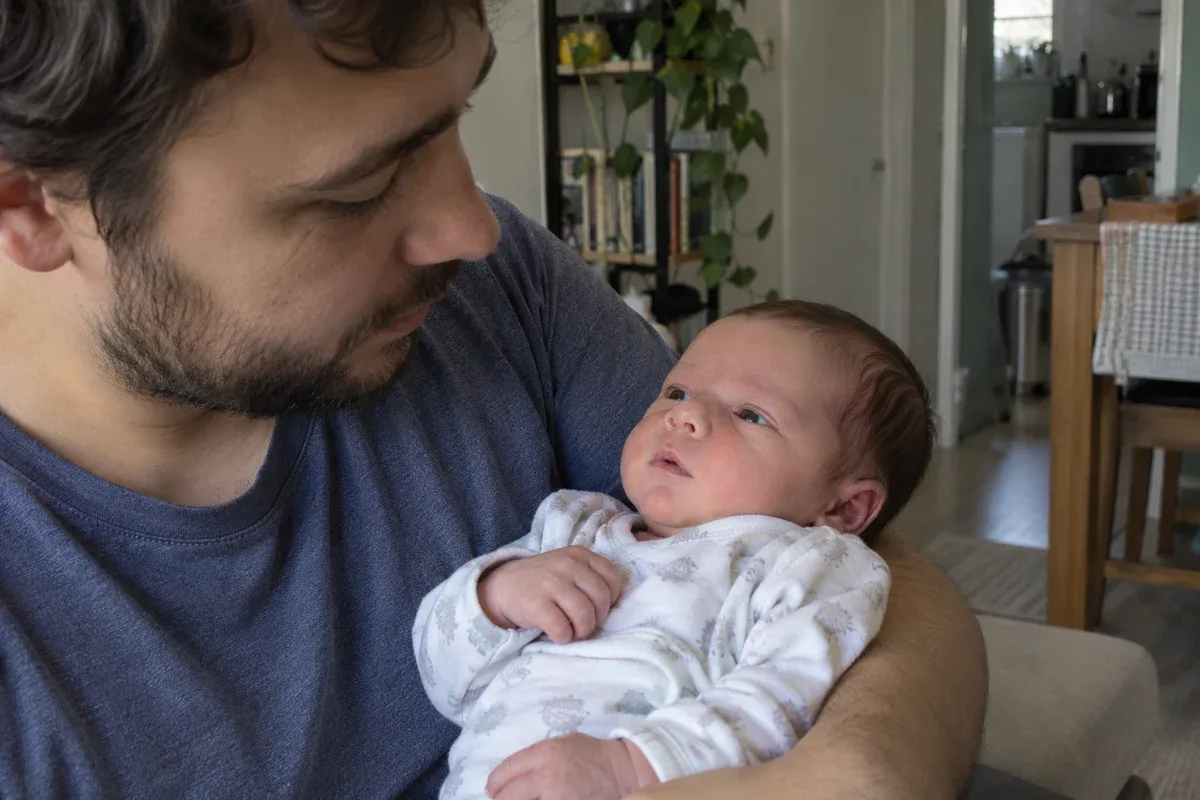
Most guides lead with yawning, but in a newborn the yawn is usually the middle of the story, not the start. The earlier signal is a drop in engagement. Your baby was studying your face a minute ago and now looks past you. Their kicks slow down. They turn their head away from the bright window or the loud room. That is the moment to start winding down, while your baby is still calm enough to drift off.
Newborn sleepy cues: early, mid and late
Sleepy cues come in a rough order, from quiet to loud. The earlier you act, the easier settling tends to be.
| What you see | What it usually means | What to do |
|---|---|---|
| A long stare, stiller body | Early: sleep is coming | Dim the room and start your wind-down |
| Turning away from the feed, faces or light | Early: too much going on | Lower the noise and light, keep holding |
| Yawning, droopy eyelids | Mid: ready now | Finish the diaper change and lay down soon |
| Rubbing eyes or face, pulling at ears | Mid: getting tired fast | Skip anything new and go straight to settling |
| Grizzling, a whiny fuss that comes and goes | Mid to late: running out of patience | Hold close, slow sway, then settle |
| Crying, arched back, clenched fists | Late: overtired | Calm first, sleep second |
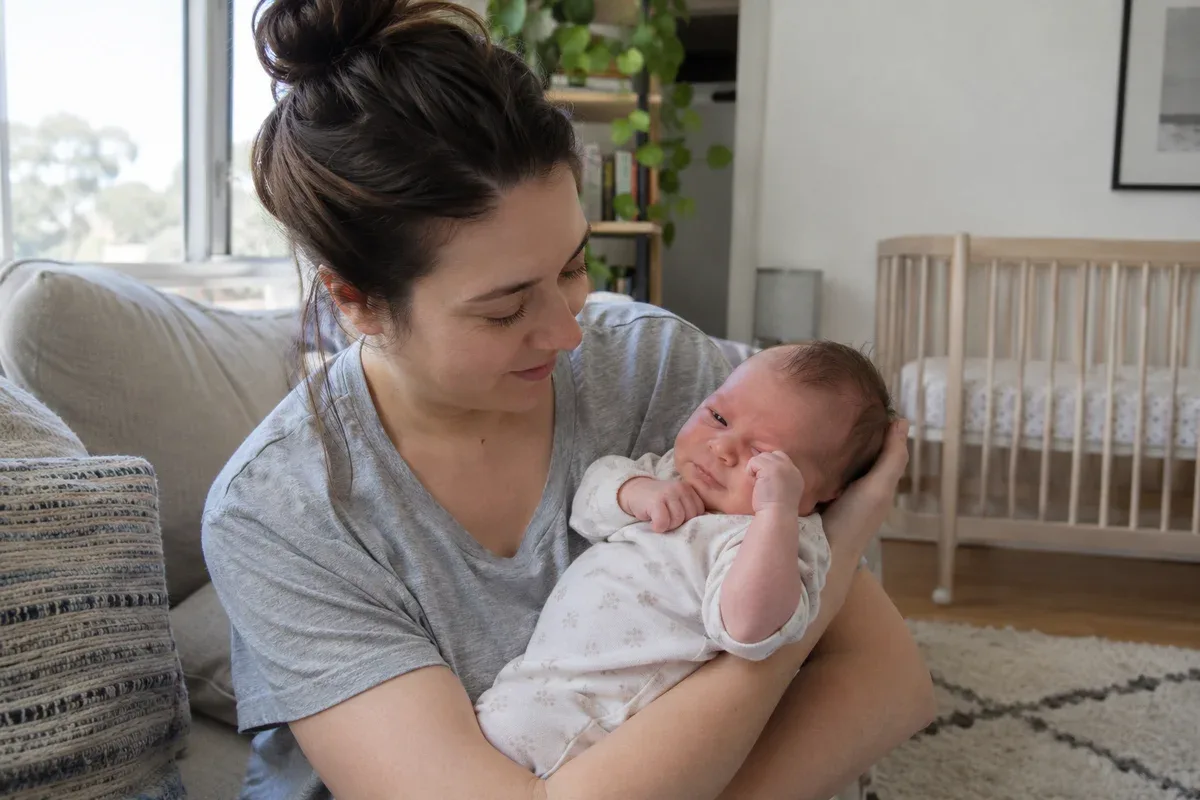
The list comes from the signs pediatrician Maureen Ahmann describes for Cleveland Clinic: yawning, droopy eyelids, staring into the distance, rubbing eyes, pulling ears, sucking fingers, arching and clenched fists. Your baby will not show all of them, and a second baby may show a different set from the first. Learn your own baby's two or three tells and trust those over any list.
Why late cues make sleep harder
Late cues make sleep harder because an overtired newborn often gets more wound up, not less. Cleveland Clinic explains that a rush of stress hormones can amp an overtired baby up instead of calming them down, which is why a baby who is clearly exhausted can still fight sleep.
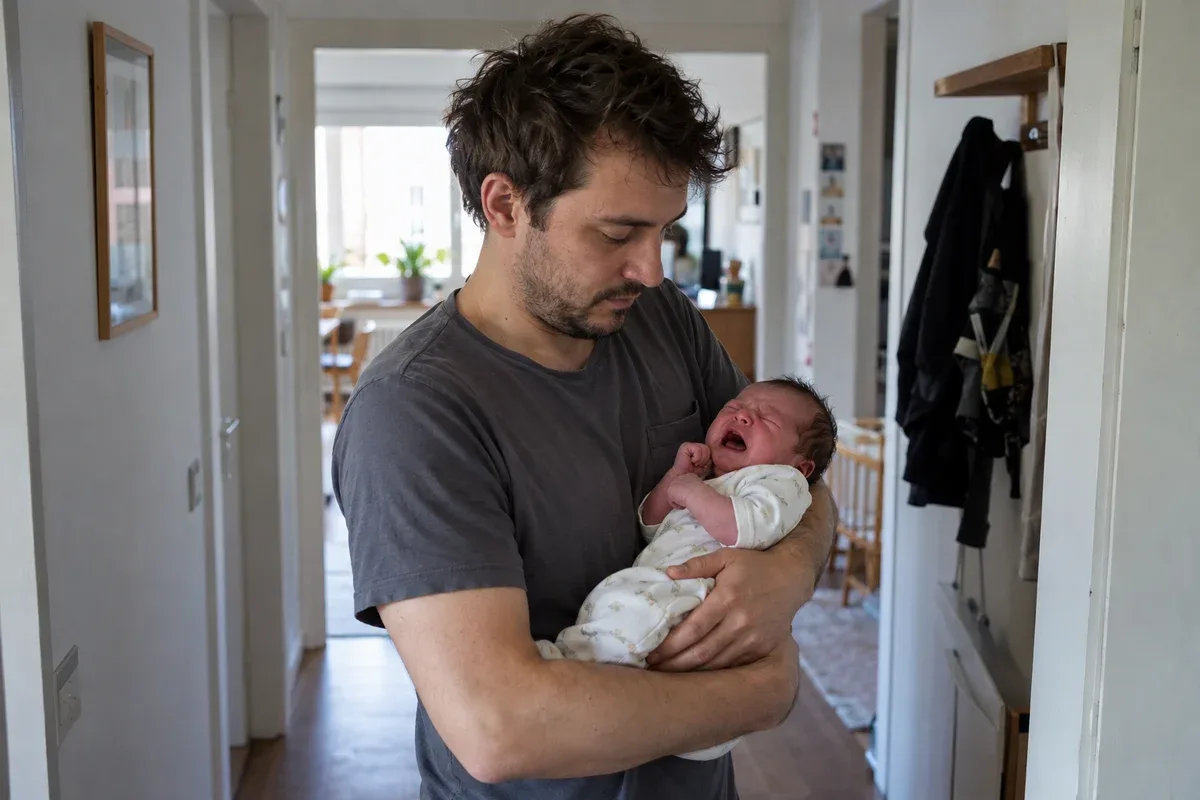
If you reach the crying stage, switch the goal. You are not trying to get your baby asleep right now; you are trying to get them calm. Hold them close, move somewhere dim and quiet, use a slow, steady sway or a low hum, and offer a feed if they want one. Once the crying settles into heavy eyes, then lay them down.
Do newborns always show sleepy cues?
No. Many newborns show few clear cues in the first weeks, and parents in the middle of a feed or a busy day often miss the ones that are there. That is why the clock matters as much as the baby.
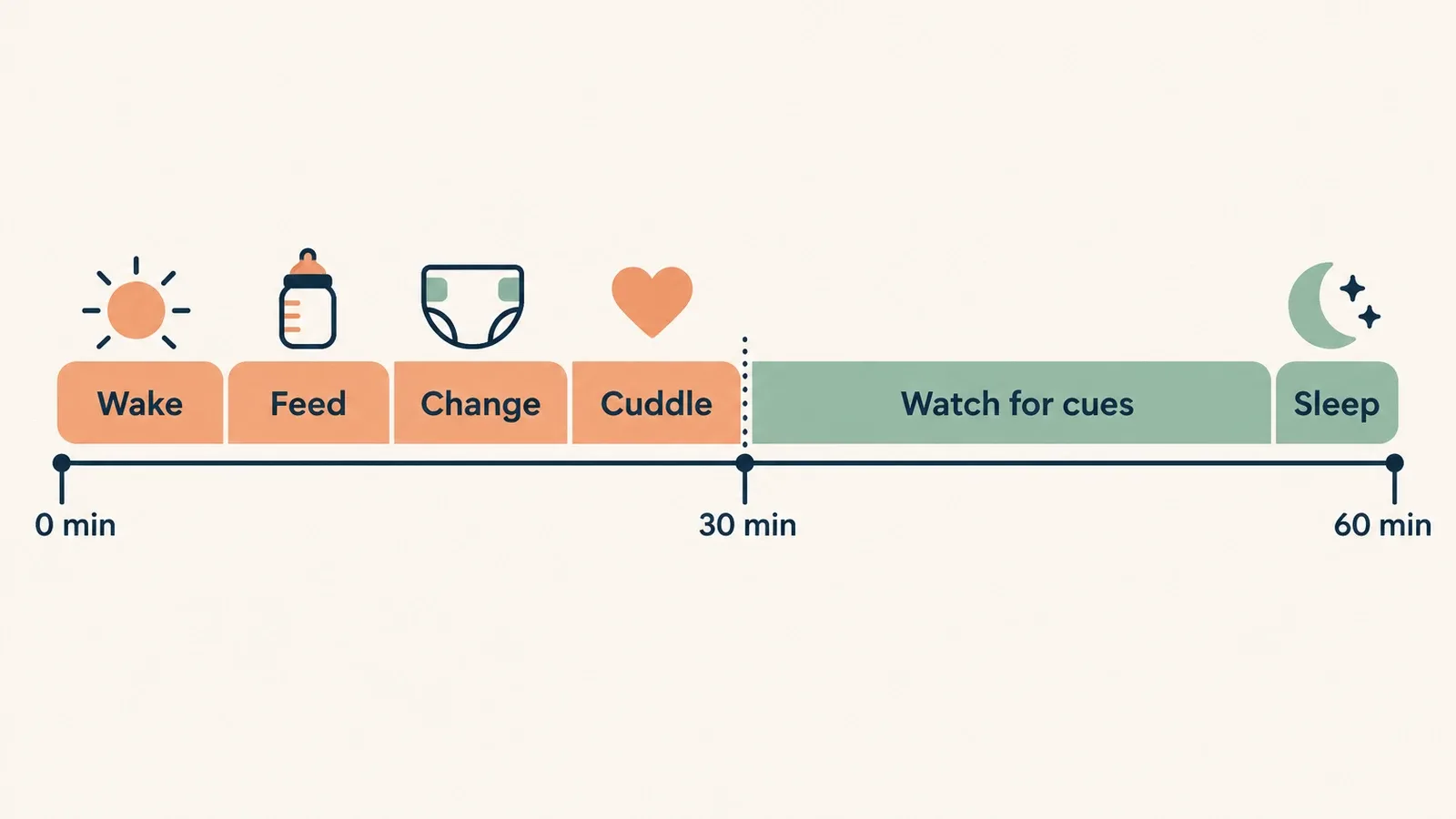
Cleveland Clinic puts newborn wake windows at 30 minutes to 1 hour. Count from the moment your baby opens their eyes, not from the end of the feed, because the feed is part of the awake time. If you reach about 45 minutes and have not seen a cue, start winding down anyway. The newborn wake windows guide walks through that feed, wake, sleep loop in detail.
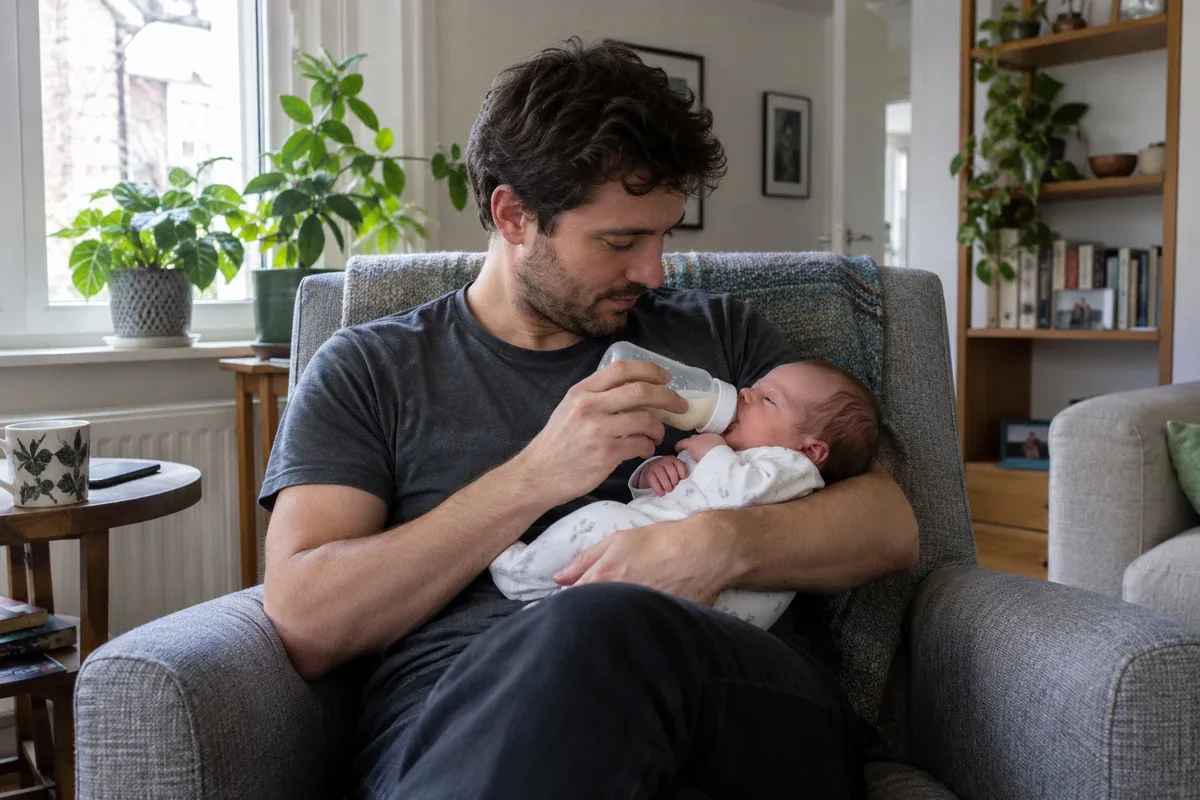
Feeds are where cues hide most often. A newborn whose eyes grow heavy mid-feed and whose sucking slows is showing you a sleepy cue in real time. If they come off the breast or bottle fussing, burp them and try settling before you assume they want more.
How cues change from newborn to 4 months
In the first weeks the clock leads, because cues are faint and windows are short. By 2 to 4 months most babies show clearer, more reliable tells, and the windows get longer.
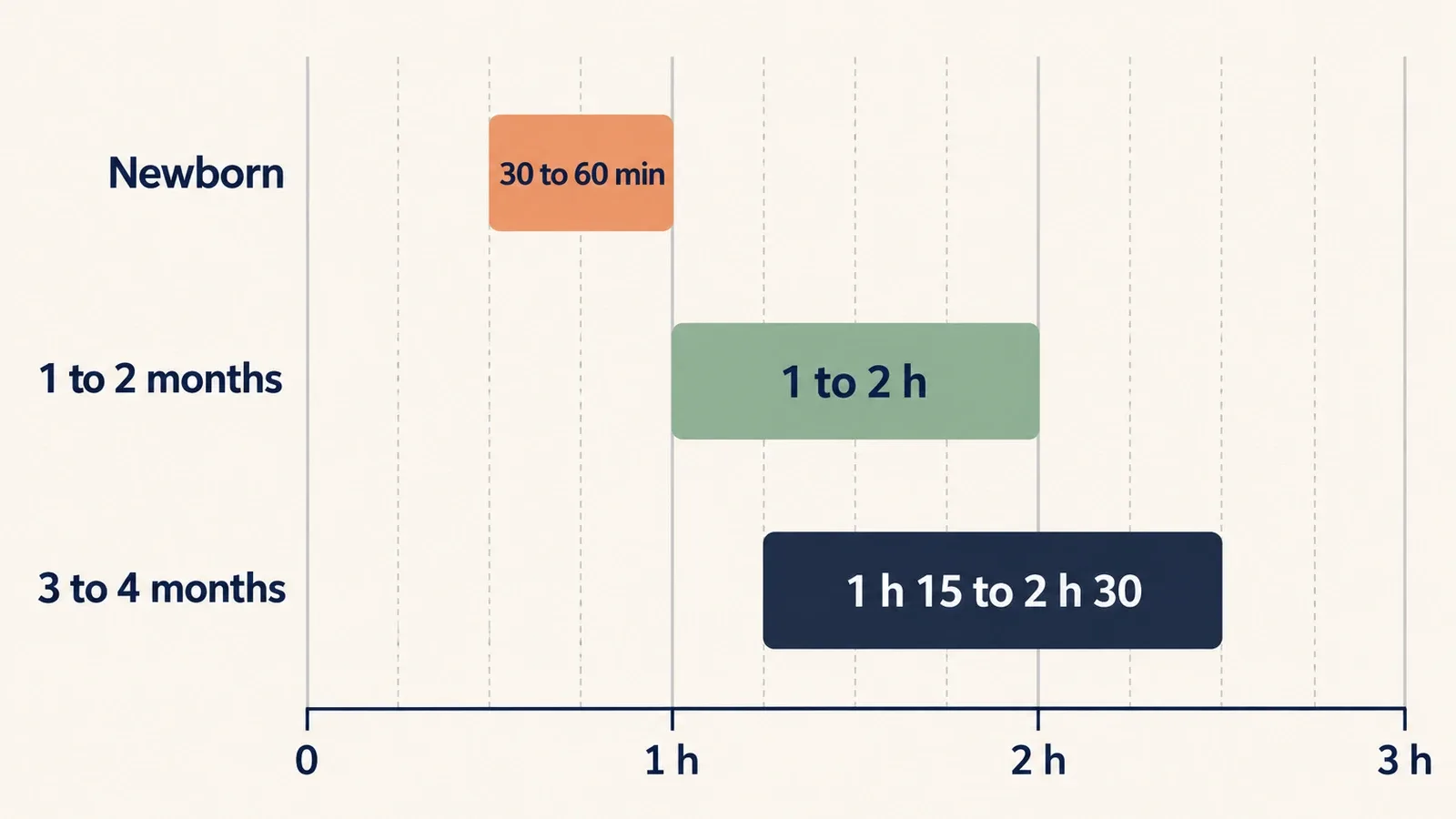
| Age | Wake window | How reliable cues are | What leads |
|---|---|---|---|
| Newborn (0 to 4 weeks) | 30 min to 1 hour | Faint, easy to miss | The clock, checked against the baby |
| 1 to 2 months | 1 to 2 hours | Clearer: stares, yawns, face rubbing | Cues, with the clock as backup |
| 3 to 4 months | 1 hr 15 min to 2 hr 30 min | Clear, but a "second wind" can hide them | Cues first, especially early ones |
Wake window ranges: Cleveland Clinic. If your baby is a few weeks old, the 3 week old wake windows post shows what the next sleep looks like now, and 6 week old wake windows show what changes when the windows stretch toward 1 to 2 hours.
How to use newborn sleepy cues
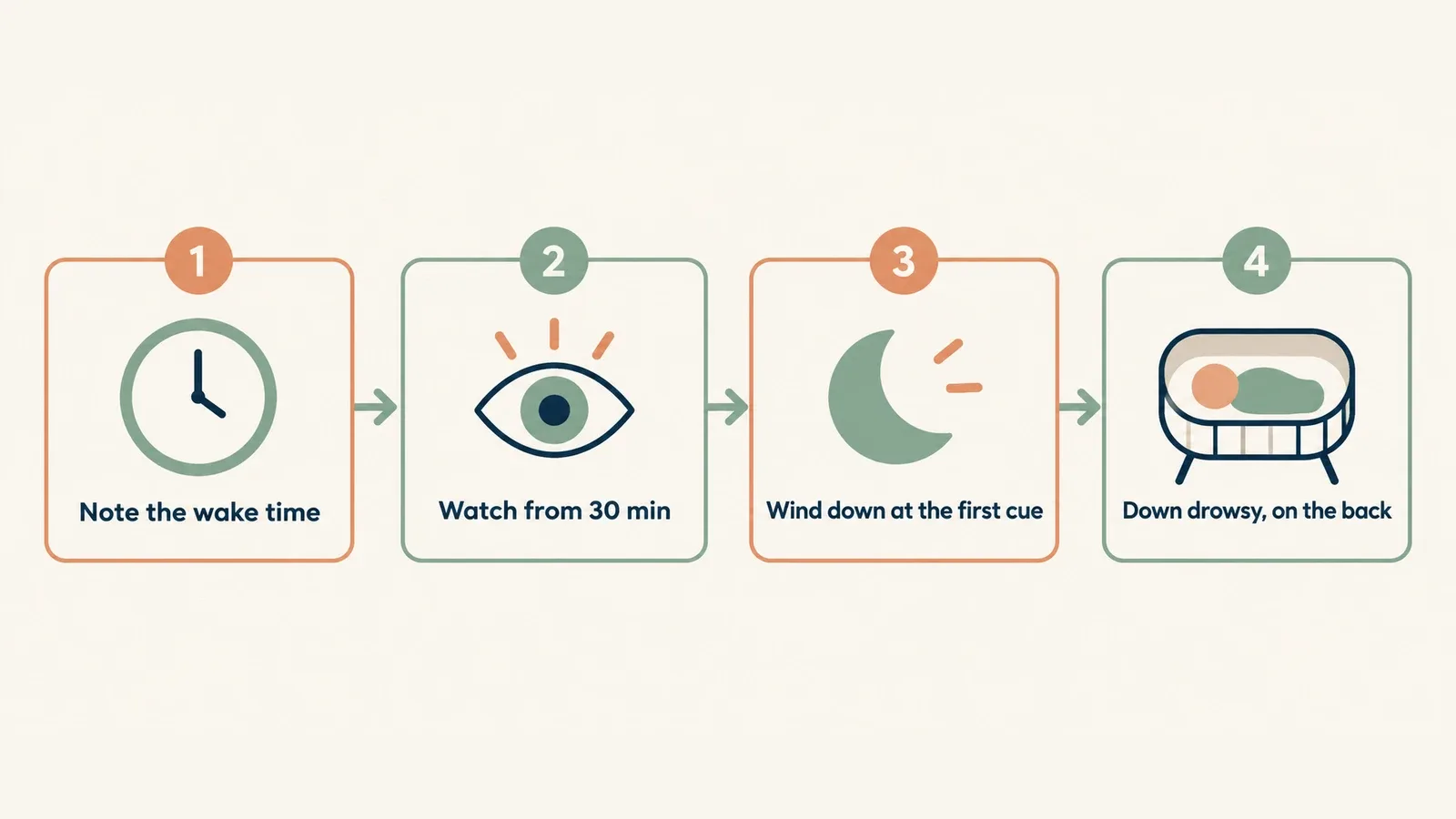
- Note when your baby woke
Remember or jot down the time your baby opened their eyes. That is the start of the wake window, feed included.
- Watch closely from about 30 minutes
Look for the quiet cues first: the stare, stiller limbs, turning away from your face or the feed.
- Start the wind-down at the first early cue
Dim the light, change the diaper, put on a sleep sack and keep things slow. If no cue has shown by about 45 minutes, start anyway.
- Lay your baby down drowsy, on their back
Place your baby on their back in an empty crib or bassinet. If they fuss, a hand on the chest and a quiet shush before you pick them up again.
A short wind-down for newborns
A newborn wind-down can be two or three minutes long. What matters is that it is calm and the same each time, not that it is elaborate.
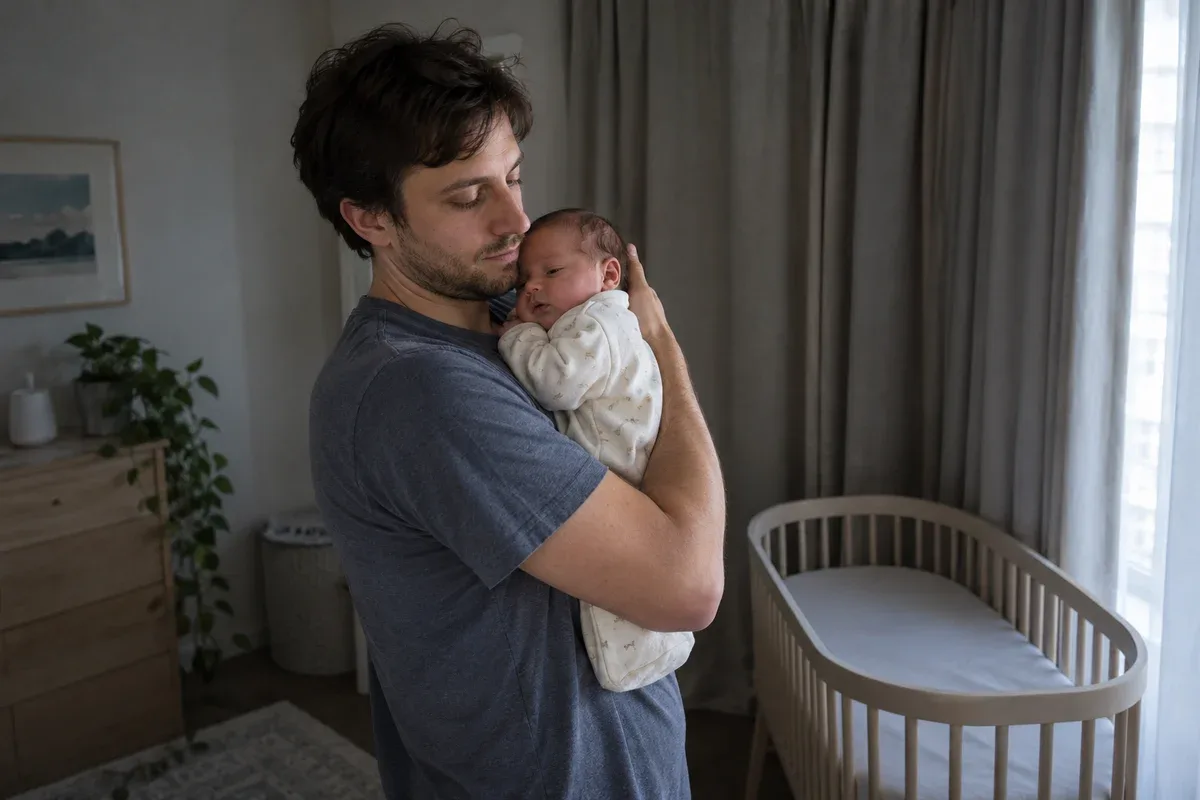
- Move away from the bright, busy room and lower the lights.
- Fresh diaper and a sleep sack, done slowly and quietly.
- A slow sway or a low, steady hum while your baby's eyes get heavy.
- Lay your baby down on their back, drowsy if you can, asleep is fine too.
If your newborn is swaddled, keep their arms in for sleep only, place them on their back every time, and watch for the signs it is time to move on in when to stop swaddling.
Common sleepy cue mistakes
- Waiting for a yawn. In a newborn the yawn is a mid cue. Start at the stare.
- Reading every fuss as hunger. Turning away from the feed can mean tired. Try settling after a burp.
- Counting from the end of the feed. The wake window starts when your baby wakes, so the feed counts.
- Adding play when your baby seems alert past an hour. A wide-eyed newborn after a long waking can be overtired, not rested.
- Trying to settle a screaming baby straight into sleep. Calm first, then sleep.
Why watching cues alone stops working
Watching cues works until it does not: the signs are faint, they change week to week, and at 3am nobody can tell a hungry fuss from a tired one with any confidence. A clock helps, but only if someone remembers when the last wake was.
The free calculator above counts from your baby's real wake time, so you only need to notice when they woke and it tells you when to start watching. A nap plan builds on that and adjusts as the windows stretch from weeks into months.
How do I keep newborn sleep safe?
Keep newborn sleep safe by using the same setup for every sleep, day or night: on the back, alone, in a crib or bassinet, on a firm, flat surface.

The AAP safe sleep guidance comes down to four rules:
- Always place your baby on their back to sleep, for naps and nights.
- Alone: nothing in the crib, no pillows, blankets, bumpers or toys.
- In a crib or bassinet with a firm, flat mattress and a fitted sheet.
- Share a room, not a bed.
If your baby falls asleep on you during a feed, move them to their crib or bassinet on their back once you have finished. For fever, pauses in breathing, blue or gray lips, difficulty waking, or unusual sleepiness with poor feeding, call your pediatrician, or emergency services if it feels urgent.
A guide, not medical advice. Call your pediatrician about fever, breathing pauses, poor feeding or a baby who is hard to wake.
Newborn sleepy cues run from quiet to loud: a stare and stiller body first, yawns and eye rubbing next, crying and arching last. Act at the quiet end, count the feed as awake time, and if your baby has been up about 45 minutes with no cue, start the wind-down anyway. Put today's wake time into the calculator above, or get a nap plan that keeps up as your baby grows. When your baby reaches a month, the 1 month old wake windows guide picks up from here, and the wake window chart shows every age at once.
Frequently asked questions
The earliest signs are quiet: staring into the distance, stiller arms and legs, and turning away from faces, light or the feed. Yawning and droopy eyelids usually come a little later.
It is a shorthand shared on social media, and people use it to mean different things. None of the versions is a pediatric guideline, so treat it as one parent's tip rather than a rule, and lean on your baby's cues and wake window instead.
Many parents name the stretch around 6 to 8 weeks, when fussing and crying often peak before easing off. Every baby is different, and if crying seems unusual or comes with other symptoms, call your pediatrician.
Yes, an overtired baby does fall asleep, but it often takes longer and the sleep that follows can be shorter. Calm your baby first in a dim, quiet room, then lay them down on their back.
Make the next stretch easy: lots of holding, a feed if they want one, a dim quiet room and a shorter next wake window. Start winding down at the first early cue for the next few sleeps.
Wake windows for this age: Newborn wake windows and nap times
Share article
About the author
Founder and editor
Alex Novak founded Napbird, builds the wake window calculator and edits every guide against the pediatric sources cited on each page. Alex is not a doctor or a sleep consultant, so Napbird is a guide, not medical advice.
More baby sleep guides
Newborn sleep · 9 min
When to Stop Swaddling: Signs Matter More Than Age
Stop swaddling at the first attempts to roll, not a birthday. Choose unrestricted sleep clothing and keep the familiar routine for naps and nights.

Wake windows & schedules · 11 min
1 Month Old Wake Windows: 1 to 2 Hours + Sample Day
1 month old wake windows are 1 to 2 hours, and the first window of the morning is usually the shortest one. See a sample 4 nap day from 7:00 am, the early sleepy cues and what to do when the day goes off plan.
Wake windows & schedules · 11 min
3 Week Old Wake Windows: 30 to 60 Min + Next Sleep
3 week old wake windows are 30 min to 1 hour, and a doze during a feed does not reset the clock. See the feed, wake, sleep loop, the early sleepy cues and a wind-down anyone in the house can repeat.
Wake windows & schedules · 10 min
6 Week Old Wake Windows: 1 to 2 Hours + 4 Nap Schedule
6 week old wake windows are 1 to 2 hours, and after a short nap the next window should be shorter, not longer. Get a sample 4 nap day from 7:00 am, the early sleepy cues and a plan for days that go off script.

Wake windows & schedules · 11 min
Newborn Wake Windows: 30 to 60 Min + Feed, Wake, Sleep
Newborn wake windows are 30 min to 1 hour, and the feed is part of that time, not a step before it. Here is the feed, wake, sleep loop, the early sleepy cues to watch for and how to count the next window from the real wake.
Night sleep · 12 min
Bedtime Routine for a 3 Month Old: 5 Steps, 20 to 30 Minutes
A 3 month old bedtime routine is 4 or 5 calm steps in the same order, about 20 to 30 minutes, ending on the back in a bare crib. Start it before the last wake window ends. Here are the steps, sample bedtimes and the mistakes to skip.